Economic and Technological Change (ECON)
ZEF's Division of Economic and Technological Change focuses on sustainable economic development and the reduction of poverty, malnutrition, and inequality. The current research program has a strong focus on economic and social aspects of food and nutrition security, sustainable agriculture and food systems, technical and institutional innovations, and rural development.
Typical examples of studies include the analysis of:
- Links between climate change, poverty, and nutrition
- Changing food environments, diets, and nutrition
- Adoption, public acceptance, regulation, and effects of new technologies
- Infrastructure, institutions, and sustainable development
- Job futures and rural employment
- Sustainable supply chains and international trade
- Food demand trends and healthy and sustainable diets
- Gender relations and women’s empowerment
- Social policies, nutrition, and health
- Development of sustainable bioeconomies
Much of the empirical analysis is carried out in low- and middle-income countries, but we also examine trends and policies in high-income countries. Analytical approaches developed and applied by our team include econometrics, experimental approaches, modeling of households, sectors, and economies, life cycle assessment (LCA), bioeconomic systems analysis, among others. We apply economic concepts in an interdisciplinary way, combined with approaches from the social, environmental, agronomic, nutrition and health sciences and other relevant disciplines. Research projects are often in cooperation with partners from all over the world. We try to combine academic rigor with policy relevance and outreach to the science community, other relevant stakeholders, and the broader public.

Prof. Dr. Matin Qaim
Genscherallee 3
53113 Bonn
Current Fields of Research
Sustainable Food Systems
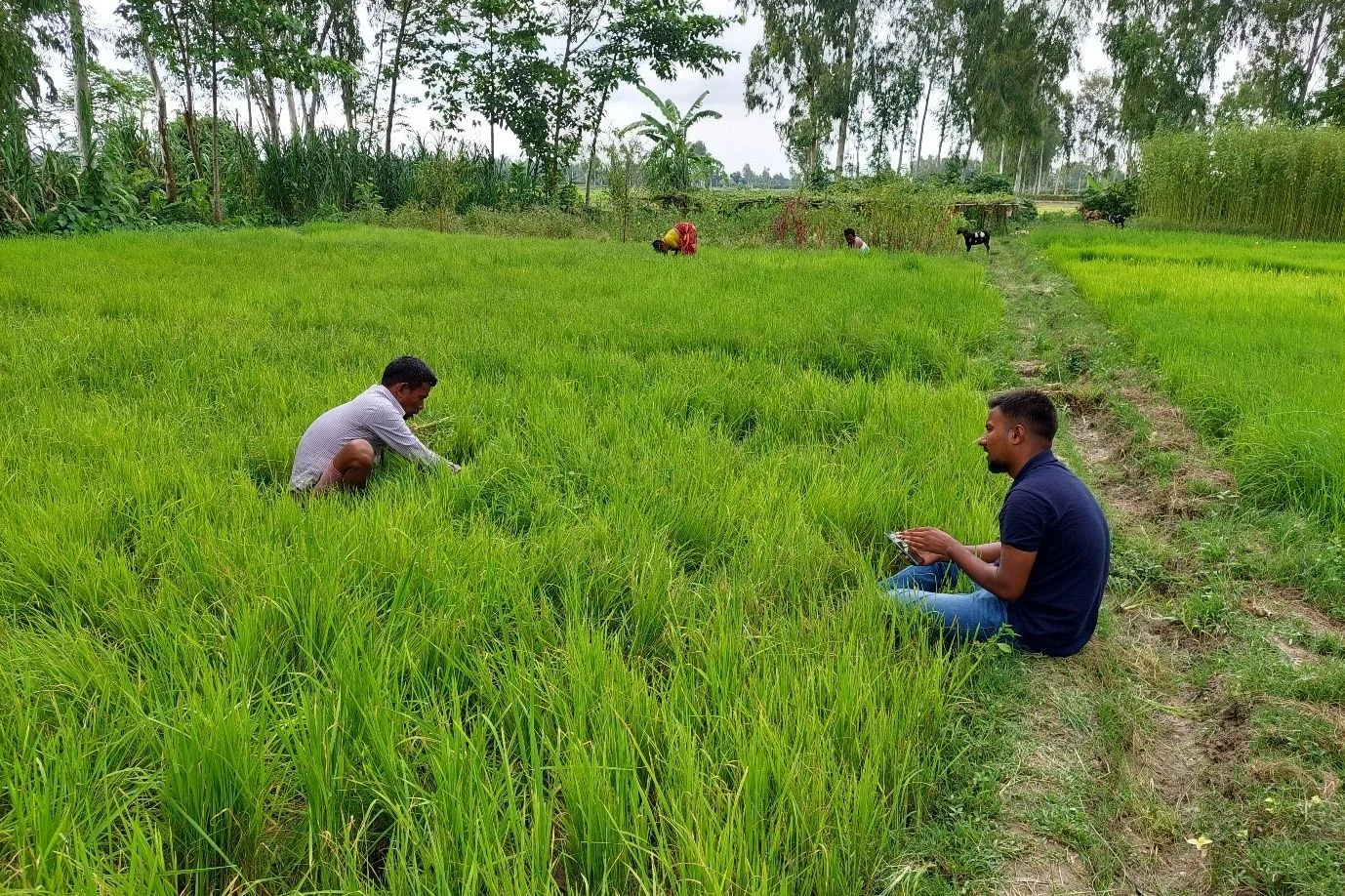
We analyze how diets can be made more healthy, sustainable, and affordable for all, with a particular focus on poor population segments. We examine the role of food supply chains, changing food environments, dietary choices, and nutrition outcomes for rural and urban populations.
Role of New Technologies
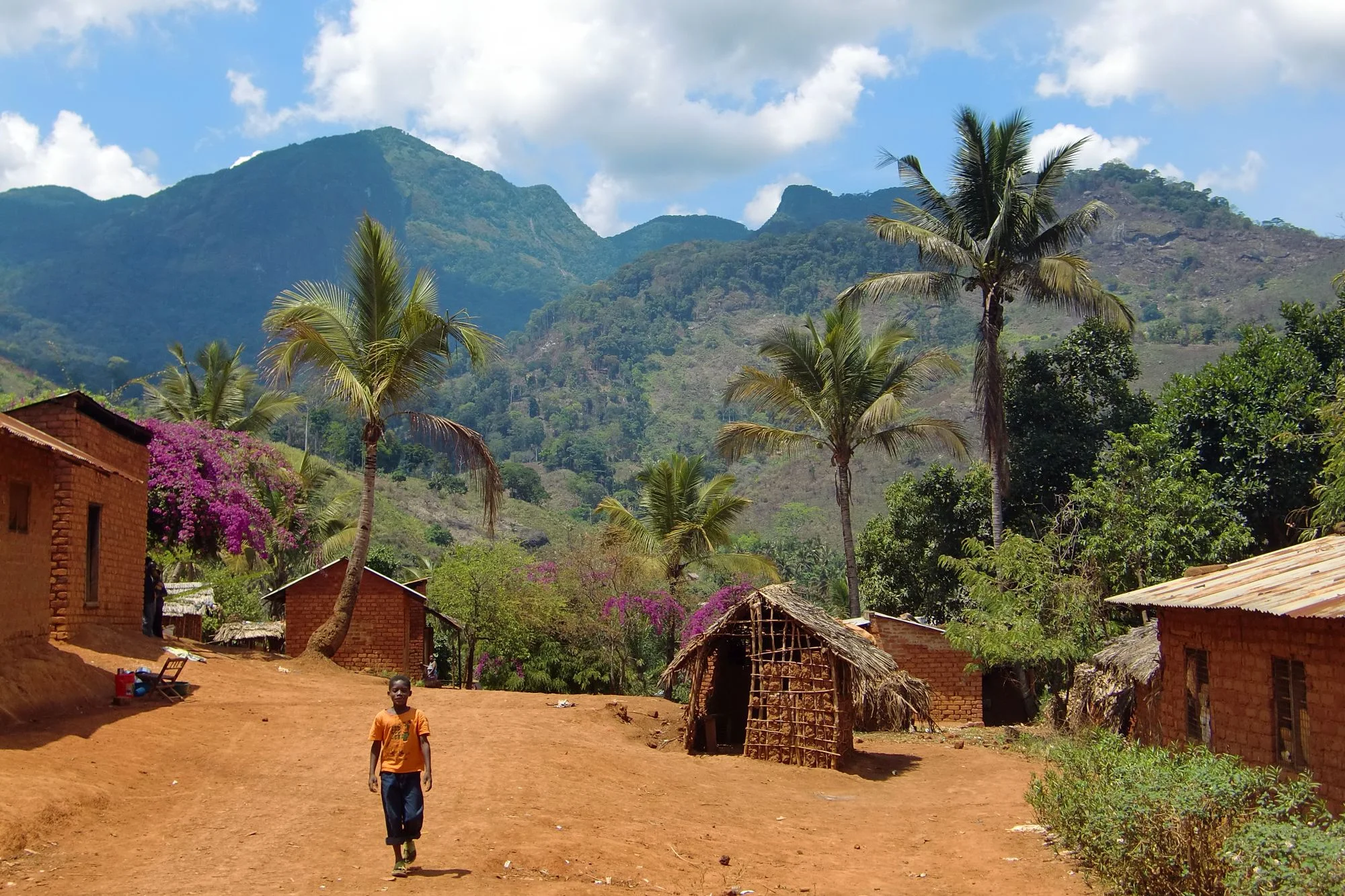
We analyze the adoption and impacts of various types of agricultural and food technologies, such as genetic/genomic innovations, agroecology practices, digital technologies, and robotics, among others. We also examine technology perceptions and broader implications for sustainable development.

Rural Labor Markets
We analyze the role of farm and off-farm income sources and jobs for rural livelihoods, resilience, and structural transformation, with a particular focus on food and nutrition security, gender roles, and decent work.
ECON Staff
- Qaim, Prof. Dr. Matin, mqaim@uni-bonn.de
- von Braun, Prof. Dr. Joachim, jvonbraun@uni-bonn.de
- Gallant, Dr. Katharina, kgallant(at)uni-bonn.de
- Parlasca, Dr. Martin, mparlasc(at)uni-bonn.de
- Ameye, Dr. Hannah, hameye(at)uni-bonn.de
- Chichaibelu, Dr. Bezawit Beyene, bchichai(at)uni-bonn.de
- Faye, Dr. Amy, afaye(at)uni-bonn.de
- Getahun, Dr. Tigabu Degu, tigyget14(at)gmail.com, tigabu@uni-bonn.de, tigyget@yahoo.com
- Klemm, Dr. Janosch, jklemm(at)uni-bonn.de
- Latka, Dr. Catharina, clatka(at)uni-bonn.de
- Maina, Dr. Cecilia, cmaina(at)uni-bonn.de
- Nguyen, Dr. Thanh Tung, tnguyen3(at)uni-bonn.de
- Paris, Dr. Juliana Minetto Gellert, jminetto(at)uni-bonn.de
- Rana, Dr. Md. Sohel, srana(at)uni-bonn.de
- Schilling, Dr. Friederike, fschilling(at)uni-bonn.de
- Abdullah, Karim, kabdullah(at)uni-bonn.de
- Anyokwu, Ewere Evelyn, evelyn.ewere(at)yahoo.com; evelyn.ewere@ilr.uni-bonn.de
- Astuti, Riska Dwi, riska.astuti(at)uni-bonn.de
- Baum, Johanna, johanna.baum(at)uni-bonn.de
- Bonzo, Benjamin Benson, bbkbonzo(at)uni-bonn.de
- Brück, Paul, paulbrueck(at)uni-bonn.de
- Elmira, Elza, eelmira(at)uni-bonn.de
- Ezebuihe, Jessy Amarachi, jezebuih(at)uni-bonn.de
- Farjana, Fariha, Fariha(at)uni-bonn.de, farihafarjana@econ.ku.ac.bd
- Gupta, Shweta, shweta.gupta(at)uni-bonn.de
- Guthoff, Jonas, jguthoff(at)uni-bonn.de
- Kafotokoza, Joshua, jshkafotokoza(at)gmail.com
- Langella, Elisa, elisa.langella(at)uni-bonn.de
- Le, Trang, trangle(at)uni-bonn.de
- Mutsami, Chrispinus, cmutsami(at)uni-bonn.de
- Ndip, Francis Ebai, francis.ndip(at)uni-bonn.de
- Nzira, Jackson Elias, jenzira(at)uni-bonn.de
- Pieper, Theresa , theresa.pieper(at)uni-bonn.de
- Surendran Padmaja, Subash, subashspar(at)uni-bonn.de
- Wang, Yufan, wangyufan_ybu(at)163.com
- Wassie, Mengistu Alamneh, mengistuaaau(at)gmail.com
- Yadav, Shweta
- Zeddies, Hendrik, hzeddies(at)uni-bonn.de
ECON Projects
Keywords
agrifood systems, food systems transformation, food environments, climate change adaptation, resilience, nutrition, governance systems, public policy, policy analysis
Countries
Burkina Faso, Cameroon, India, Kenya, Madagascar, Malawi, Mali, Nigeria, Togo, Zambia
Summary
The Agrifood Systems-Transformative Research and Policy program at the Center for Development Research was initiated in November 2023 and will be implemented over a period of 3.5 years.
The program will strengthen the capacity and knowledge of program partner countries to craft and implement effective policies by providing the research and analytical support to develop evidence-based pathways and policies for a sustainable transformation of agrifood systems. The program will also facilitate peer-to-peer exchange and learning events (at the country and regional levels as well as at global fora) for the development of evidence-based sustainability- and resilience-enhancing policies and strategies. Finally, the program will address questions about governance structures, multisectoral and multistakeholder coordination mechanisms that are reflective of the interlinked challenges countries face, and support the development of metrics to better measure and evaluate the impact of interventions and policy structures.
Activities include research and technical support to partner countries in identifying synergies between food, agricultural and social development, nutrition, climate change, biodiversity protection, and environmental health within the broader framework of strengthening the resilience and sustainability of agrifood systems and agrifood systems transformation. The program will identify “low-hanging fruits” in partner countries as possible entry points for targeted interventions to enable evidence-based policy design and implementation. These research activities will be complemented by contributions to peer-to-peer exchange and learning events aimed at discussing what type of interventions may work or have worked already and could be replicated and brought to scale in order to avoid costly “failed experiments”. The research will also identify and highlight possible synergies and tradeoffs of policy interventions with respect to multiple sustainability dimensions (e.g., income, nutrition, gender, climate, biodiversity, etc.).
The program provides technical support to three GIZ programs: the global program on the transformation of food systems (Globalvorhaben Transformation der Ernährungssysteme), the global program on sustainable agrifood systems and policies (Globalvorhaben Nachhaltige Agrarsysteme und Agrarpolitik) and Knowledge for Nutrition (K4N). It will be implemented in the following countries*: Burkina Faso, Cameroon, India, Kenya, Madagascar, Malawi, Mali, Nigeria, Togo, and Zambia.
*Final list of countries tbc
Main Cooperation Partners
Country partners (research, policy), GIZ, BMZ
Main Funding Partners
GIZ
Glatzel, K., Maina, C.C., Nyishimirente, A., Klemm, J. and M. Qaim. 2025. Leveraging the opportunities of neglected and underutilized crops for nutrition and Climate resilience - Summary
» Download
Glatzel, K., Ameye, H., Hülsen, V. and M. Qaim. 2024. Changing Food Environments in Africa’s Urban and Peri-Urban Areas: Implications for Diets, Nutrition, and Policy. (ZEF Working Paper 235)
» Download
» Summary
NDC and UNFSS Pathway Analyses – highlighting synergies & accelerating dialogue: India (October 2024)
» Download
NDC and UNFSS Pathway Analyses – highlighting synergies & accelerating dialogue: Kenya (October 2024)
» Download
NDC and UNFSS Pathway Analyses – Highlighting synergies & accelerating dialogue: Cameroon (October 2024)
» Download
NDC and UNFSS Pathway Analyses – Highlighting synergies & accelerating dialogue: Zambia (February 2025)
» Download
Event write-ups
Summary Report Think20 Side Event at the Hamburg Sustainability Conference 2024, October 8, 2024
» Download
Duration of the Project
November 2023 – April 2027
Team
- Dr Janosch Klemm (project leader)
- Prof Matin Qaim
- Cecilia Maina
Contact
Dr. Janosch Klemm, Phone.: +49-228-73-1884
Keywords
Agricultural technology, CGIAR, technology adoption, impact evaluation, smallholder farmers, institutional innovations
Countries
Vietnam
Summary
This project analyzes the dynamics of agricultural innovation in Vietnam with a particular focus on technologies and institutional innovations developed by CGIAR International Agricultural Research Centers. Relevant innovations are identified through a stocktake exercise. Innovation adoption and factors supporting or hindering uptake in the small-farm sector are examined with nationally-representative data, including household and community surveys, remote sensing, and DNA fingerprinting techniques. Impacts of innovation adoption on agricultural productivity, food security, poverty, gender dynamics, and various environmental outcomes are evaluated, combining econometric modeling with remote sensing and machine learning approaches. Qualitative interviews with farmers and other stakeholders are carried out to better understand the effects and their underlying mechanisms.
Methodology
- Stocktaking of relevant agricultural innovations
- Household, community, researcher, and stakeholder surveys
- DNA fingerprinting analysis to identify genetic innovations
- Remote sensing with satellite imageries to analyze land use
- Innovation adoption and impact analysis
- Panel data econometric modeling
Main Cooperation Partners
- Center for Development Research (ZEF), University of Bonn
- Institute for Food and Resource Economics (ILR), University of Bonn
- Vietnam National University of Agriculture (VNUA)
- Vietnam General Statistics Office (GSO)
Main Funding Partners
CGIAR Standing Panel on Impact Assessment (SPIA)
Duration of the Project
December 2024 – December 2027
Team
- Dr. Thanh Tung Nguyen (ZEF)
- Prof. Dr. Matin Qaim (ZEF)
- Prof. Dr. David Wuepper (ILR, Bonn)
- Prof. Dr. Thi Lan Nguyen (VNUA)
- Dr. Duy Linh Nguyen (VNUA)
- Assoc. Prof. Dr. Viet Long Nguyen (VNUA)
- Assoc. Prof. Dr. Viet Cuong Ha (VNUA)
- Dr. Truong Lam Do (VNUA)
- Dr. Quoc Trung Nguyen (VNUA)
Contact
Dr. Thanh Tung Nguyen, Phone.: +49-228-73-4902
Keywords
Nutrition, food security, cost- effectiveness, environment, agriculture, subsidies
Countries
China
Summary
How well do food systems in China promote healthy diets among rural and urban populations, and how sustainable are these diets in terms of their environmental footprints? How could food and agricultural policies in China and related technical and institutional innovations contribute to more sustainable agricultural production and healthier food choices? These questions are addressed here through empirical studies at various food system levels, using individual-, household-, farm-, and market-level data.
This research explores how evolving agricultural and trade policies, as well as changing food environments (e.g., the growth of supermarkets), influence farming structures, food access for consumers, affordability and cost-effectiveness of healthy diets, and nutritional outcomes for children and adults in rural and urban areas. Effects on gender roles and environmental sustainability are also analyzed. The research findings aims to inform policy-making about pathways for improved access to and affordability of nutritious and environmentally-friendly diets.
Methodology
- Secondary data analysis
- Differences-in-differences approaches
- Linear programming models
- Stocktaking of prevailing dietary patterns, food and agricultural policies
Main Cooperation Partners
- Center for Development Research (ZEF), University of Bonn
- China Agricultural University (CAU)
- Zhejiang University
Main Funding Partners
China Scholarship Council (CSC)
Duration of the Project
January 2022 – March 2028
Team
- Dr. Catharina Latka (ZEF)
- Prof. Dr. Matin Qaim (ZEF)
- Zhen Liu (ZEF and Zhejiang University)
- Yufan Wang (ZEF)
- Wenyan Xu (CAU and ZEF)
Contact
Dr. Catharina Latka , Phone.: +49-228-73-1841
Keywords
Social, environmental, and economic externalities; true cost accounting; food system; child labor
Countries
Uganda, Kenya
Summary
FOODCoST aims to support the transition towards sustainable food systems by proposing a harmonising methodology to calculate externalities in climate, biodiversity, environmental, social and health along the food value chain.
Methodology
Case studies and modelling
Main Cooperation Partners
- University of Wageningen, Netherlands
- Makarere University, Uganda
Main Funding Partners
EU
Publications
Joachim von Braun, Sheryl L. Hendriks (2023) Full-cost accounting and redefining the cost of food: Implications for agricultural economics research. Agricultural Economics. 2023;1–4. https://onlinelibrary.wiley.com/doi/full/10.1111/agec.12774
Duration of the Project
2023-2026
Project Homepage
https://www.foodcost-project.eu/
Team
- Joachim von Braun
- Bezawit Chichaibelu
Contact
Prof. Dr. Joachim von Braun, Phone.: +49-228-73-1800
Keywords
Financial support of doctoral research on food systems, nutrition, and food security
Summary
The Hermann Eiselen Ph.D. Research Support Program, an initiative of the German Foundation fiat panis, actively supports doctoral research in the fields of food security, nutrition, and food systems. This grant program is designed to provide doctoral students at ZEF with essential funding to conduct empirical research into the critical issue of food security.
Since its inception in 2011, the fiat panis Foundation has funded over 100 research projects at ZEF, all contributing to interdisciplinary doctoral research and the successful completion of dissertations. These studies have furthered understanding of food security challenges and have provided valuable insights into sustainable solutions to end hunger and malnutrition.
Duration of the Project
Since 2011
Project Homepage
http://www.stiftung-fiat-panis.de/en/
Contact
Dr. Silke Tönsjost, Phone.: +49-228-73-1794
Keywords
Labor markets, income diversification, gender, social welfare
Countries
Kenya, Tanzania, Namibia, Zambia
Summary
Households in rural Africa typically have diversified income sources. Beyond own farm production, many also work on other farms as agricultural laborers, have formal or informal employment in other sectors, or pursue self-employed business activities. With rapidly rising population numbers, the diversification of income and employment sources in rural Africa – also beyond the agricultural sector – will likely continue in the coming years and decades. Sufficient generation of decent employment in various rural sectors could contribute to sustainable structural transformation and development, whereas inadequate job availability could perpetuate poverty and natural resource degradation. Hence, studying employment trends and the factors that influence current and future job availability, accessibility, and quality needs to be an integral element of “future-making” research in rural Africa. This project collects and uses data from four Eastern and Southern African countries – Kenya, Tanzania, Namibia, and Zambia – to provide insights under diverse agroecological and socioeconomic conditions. The following research questions are addressed: (1) What income and employment sources do rural households and individuals have, and how are these sources associated with economic and social welfare? (2) To what extent are employment patterns associated with the use of specific agricultural technologies and innovations? (3) What role do rural infrastructure and institutions play? (4) How do labour conditions compare in relevant rural sectors? (5) What are conducive household-level and contextual conditions for sustainable job futures?
Methodology
Together with local partners we collect household- and individual-level data as well as employer data through structured personal interviews. Statistical models are developed and estimated to analyze people’s access to different types of employment, determinants of participation, labor conditions, and effects on income, food security, gender roles, and inequality. Employment trends and their drivers are analyzed with panel data.
Main Cooperation Partners
- University of Bonn
- University of Cologne
- University of Nairobi, Kenya
- Sokoine University of Agriculture, Tanzania
- University of Namibia, Namibia
- University of Zambia, Zambia
Main Funding Partners
German Research Foundation (DFG)
Duration of the Project
2022 - 2025
Project Homepage
https://www.crc228.de/
Team
- Prof. Dr. Matin Qaim (project leader)
- Dr. Martin Parlasca
- Chrispinus Mutsami
- Jonas Guthoff
- Jackson Elias Nzira
- Jessy Amarachi Ezebuihe
Contact
Prof. Dr. Matin Qaim, Phone.: +49-228-73-1847
Summary
The Malabo Montpellier Panel works to accelerate progress towards sustainable food systems transformation in Africa. It identifies areas of progress and positive change across the continent and assesses what successful countries have done differently. It identifies and analyses the most important policy and institutional innovations and programmatic interventions that can be replicated and scaled up by other countries.
The Malabo Montpellier Panel, co-chaired by Dr. Ousmane Badiane (Executive Chairperson, AKADEMIYA2063) and Prof. Joachim von Braun (Distinguished Professor, University of Bonn), convenes 18 leading experts in agriculture, ecology, nutrition, and food security to facilitate policy innovation by African governments to accelerate progress towards sustainable food systems transformation in Africa.
The affiliated Malabo Montpellier Forum provides a platform to promote policy innovation by using the evidence produced by the Panel to facilitate dialogue and exchange among high-level decision-makers on African food systems transformation, climate change adaptation, and mitigation. The Forum is co-chaired by H.E. Hailemariam Dessalegn, former Prime Minister of Ethiopia, and H.E. Assia Bensalah Alaoui, Ambassador at Large to His Majesty Mohamed VI, the King of Morocco.
Main Cooperation Partners
AKADEMIYA2063
Main Funding Partners
- The German Federal Ministry for Economic Cooperation and Development (BMZ)
- The African Development Bank (AfDB)
- The United States Agency for International Development (USAID)
Publications
- Malabo Montpellier Panel Brochure
- Malabo Montpellier Panel Factsheet
All other publications can be found on the project website.
Duration of the Project
01.01.2023 - 31.12.2026
Project Homepage
https://www.mamopanel.org/
Team
Panel Members
Contact
Prof. Dr. Joachim von Braun, Phone.: +49-228-73-1800
Keywords
Sustainable agricultural growth; food and nutrition security; targeting innovation investments; development of the agri-food sector; mechanization of skills; youth engagement; digitalization in agriculture; Africa, India
Countries
Benin, Burkina Faso, Cameroon, Ethiopia, Ghana, India, Kenya, Malawi, Mali, Nigeria, Togo, Tunisia, Zambia
Summary
Africa is increasingly emphasizing the role of innovation in development. The Science, Technology and Innovation Strategy for Africa 2024 takes into consideration the social, economic, and technological progress Africa has made over the last decade. Innovation for sustainable and high agricultural growth forms an important part of this ambition. The German Government has acknowledged this innovation potential and wants to support the improvement of food and nutrition security and sustainable agricultural value chains through Green Innovation Centers (GICs) in Africa and India implemented by the GIZ.
PARI brings together partners from Africa, India and Germany to conduct research on sustainable agricultural development, food systems transformation, and food and nutrition security in Africa and India.
Methodology
PARI pursues the following strategies:
- Analyses of the potential and impact of innovations (which innovations to invest in, where and for whom),
- Identification and assessment of supportive measures to strengthen the framework / policy conditions for the generation and dissemination of promising agriculture and rural areas development–related innovations, and
- Engaging with food, nutrition, agriculture and rural areas development policy makers to inform reforms and investment decisions that an improve job creation and food and nutrition security.
The core topics and thematic research priorities of the PARI have been identified in accordance with the African Union’s CAADP (Africa’s policy framework for agricultural transformation, wealth creation, food security & nutrition, economic growth & prosperity for all) as part of the New Partnership for Africa’s Development (NEPAD).
Drawing on these priorities as well as research findings by the PARI partners to date, research is structured in four themes:
Theme 1: Scaling innovations to promote multi-sectoral and sustainable approaches for small-scale producers
- Multi-sectoral approaches in small-scale production systems, incl. animal husbandry and aquaculture
- Promotion of sustainable, climate-smart production methods
- Targeted measures that specifically support and empower women
- Evaluation of experiences with the widespread dissemination of relevant technological and institutional innovations – Africa and India
Theme 2: Investment in infrastructure and skills as framework conditions for rural development and urban linkages
- Complementary investments in hard and soft infrastructure
- Innovative approaches to skill development for small-scale producers
Theme 3: Supporting sustainable and fair food systems through digital opportunities
Theme 4: Structural transformation of national agricultural innovation and research systems
Main Cooperation Partners
National partners in Africa and India:
- Forum for Agricultural Research in Africa (FARA)
- African Growth and Development Policy Modeling Consortium (AGRODEP)
- University of Hohenheim (UHOH)
- Akademiya2063
- National Partners in Africa
Main Funding Partners
PARI is funded by the German Federal Ministry for Economic Cooperation and Development (BMZ)
Duration of the Project
December 2014 – December 2025
Project Homepage
https://research4agrinnovation.org/
Team
- Prof. Dr. Joachim von Braun
- Prof. Dr. Assefa Admassie
- Dr. Heike Baumüller
- Dr. Bezawit Beyene Chichaibelu
- Dr. Amy Faye
- Friederike Schilling
Contact
Prof. Dr. Joachim von Braun , Phone.: +49-228-73-1800
Keywords
Digital Farming Technologies, Robotics, Public Perceptions, Crop Farming Systems
Countries
Germany
Summary
Digital technologies are changing agricultural production systems and will characterize agriculture in the future. Autonomous machines (robots), for example, strongly deviate from traditional agricultural images and farming practices. The main interest of this project is to analyze and better understand society’s attitudes toward the increasing digitalization in agriculture. This project is part of the PhenoRob Excellence Cluster at the University of Bonn.
More specifically, this project aims at: (1) Exploring what citizens know about digitization and automation in agriculture and how they perceive current developments, (2) outlining scenarios of what agriculture, especially crop farming, could look like in the future and (3) combining these pieces of informations into an overall picture with the experiences from the practical development of machines and models in the PhenoRob project and farmers' perspectives regarding new technologies. Results may help to improve public communication around new digital farming technologies.
Methodology
- Online surveys and experiments with German citizens
- Multivariate statistical analysis methods
Main Cooperation Partners
DFG (Deutsche Forschungsgemeinschaft through PhenoRob Cluster of Excellence)
Duration of the Project
2022 - 2025
Project Homepage
https://www.phenorob.de/cp-6-technology-adoption-and-impact/
Team
- Hendrik Zeddies
- Prof. Dr. Matin Qaim
- Prof. Dr. Gesa Busch (University of Applied Sciences Weihenstephan-Triesdorf)
- Dr. Martin C. Parlasca
Contact
Hendrik Zeddies, Phone.: +49-228-73-
Keywords
Vegetable production and consumption, Healthy diets, Micronutrients, Food production technologies
Countries
Germany, Ghana, other countries in Africa
Summary
African countries will need to significantly increase their production and consumption of vegetables to address malnutrition and ensure access to healthy foods for the growing population. This is a major challenge, especially in the context of climate change, as heat, water scarcity, and increasing problems with plant diseases and pests make it difficult to increase productivity in the open field. Greenhouse vegetable production could be an important part of the solution for both urban and rural areas. The START project develops new greenhouse technologies ( “deep water cultivation” techniques) for efficient production of various types of vegetables. Research and testing grounds are established at the University of Bonn, considering current and future conditions in Africa.
Ghana is used as one country example. ZEF researchers collect comprehensive data from rural and urban households in Ghana to analyze the role of various types of vegetables for people’s diets and livelihoods and how production and consumption may potentially change through the new greenhouse technologies. Preferences for different local and exotic vegetables as well as the potential acceptance of new production technologies are also investigated. Based on various data sources, future scenarios in which new types of greenhouses produce more vegetables at affordable prices and with less seasonal variation are developed and analyzed in terms of their impacts on nutrition, health, socioeconomic development, and environmental sustainability.
Main Cooperation Partners
- University of Bonn, Institute of Crop Science and Resource Conservation (INRES)
- University of Ghana
- RWTH Aachen
- Bio Innovation Park Rheinland
Main Funding Partners
BMBF
Duration of the Project
04/2023 - 03/2027
Team
at ZEF:
- Prof. Dr. Matin Qaim (lead)
- Dr. Martin Parlasca
- Elisa Langella
- Benjamin Bonzo
at INRES (Sustainability Campus Klein-Altendorf):
- Prof. Dr. Ralf Pude
- Dr. Marcell Moll
at University of Ghana:
- Prof. Dr. Felix Asante
Contact
Prof. Dr. Matin Qaim, Phone.: +49-228-73-1847
Keywords
Life cycle assessment, food, environmental footprint, cost of diets, nutrient adequacy
Countries
Ethiopia, Ghana, Nigeria
Summary
Dietary change needs to be an integral part of food system transformations to enable food and nutrition security within the planetary boundaries. However, what type of diets and dietary shifts could lead to healthy and sustainable outcomes under different ecological and socioeconomic conditions is not yet sufficiently clear. In this project, we aim to better understand the links between dietary patterns, nutrition, and the environment and identify realistic dietary changes that could lead to more healthy and sustainable outcomes under varying conditions in Africa. Using nationally representative micro-level data from three countries – Ethiopia, Ghana, and Nigeria – we improve the methodological approaches for a combined nutritional and environmental sustainability assessment of diets, considering the socioeconomic context. Our focus is on evaluating food security, dietary quality, and nutrient adequacy of various macronutrients and micronutrients and assessing the environmental impacts of diets in terms of carbon, water, and land-use footprints and proxies of biodiversity. We also analyze the costs of diets to evaluate the affordability of healthy and sustainable nutrition. Beyond analyzing average diets, we also differentiate between urban and rural areas and between richer and poorer households. Results will lead to relevant policy recommendations and can also stimulate important follow-up work to improve sustainable food and nutrition security.
Methodology
- Environmental life cycle assessment (LCA) of diets
- Analysis of nutrient adequacy
- Analysis of costs and affordability of diets
Main Cooperation Partners
- Center for Development Research (ZEF), University of Bonn
- Institute for Nutritional and Food Science (IEL), University of Bonn
- University of Ghana, Legon, Accra
Main Funding Partners
Foundation fiat panis
Duration of the Project
November 2024 – March 2026
Team
- Dr. Juliana Minetto Gellert Paris (ZEF and IEL)
- Prof. Dr. Matin Qaim (ZEF)
- Prof. Dr. Ute Nöthlings (IEL)
- Prof. Dr. Felix Asante (University of Ghana)
Contact
Dr. Juliana Minetto Gellert Paris, Phone.: +49-228-73-4967
Selected publications
- Ameye, H., V. Hülsen, K. Glatzel, A. Laar, M. Qaim (2025). Urbanizing Food Environments in Africa: Challenges and Opportunities for Improving Accessibility, Affordability, Convenience, and Desirability of Healthy Diets. Food Policy, 137, 102981, https://doi.org/10.1016/j.foodpol.2025.102981.
- Pieper, T., T.-T. Nguyen, M. Qaim (2025). Access to Electricity and Gendered Labor Allocation: Insights from Ethiopia. Energy Policy, 207, 114814, https://doi.org/10.1016/j.enpol.2025.114814.
- Llerena Pinto, M.C., A. Mirzabaev, M. Qaim (2025). Effects of Recurrent Rainfall Shocks on Poverty and Income Distribution in Rural Ecuador. World Development, 195, 107107, https://doi.org/10.1016/j.worlddev.2025.107107.
- Qaim, M., M.C. Parlasca (2025). Agricultural Economics and the Transformation Toward Sustainable Agri-Food Systems. Agricultural Economics, Vol. 56, No. 3, pp. 327-335, https://doi.org/10.1111/agec.70023.
- Rana, M.S., A. Faye, M. Qaim (2025). Temporary Migration Decisions and Effects on Household Income and Diets in Rural Bangladesh. Agricultural Economics, 56, 769-781, https://doi.org/10.1111/agec.70030.
- Nguyen, T.-T., M. Qaim (2025). Local and Regional Food Production Diversity are Positively Associated with Household Dietary Diversity in Rural Africa. Nature Food, 6, 205-212, https://doi.org/10.1038/s43016-024-01096-6.
- Qaim, M., R. Barrangou, P.C. Ronald (2024). Sustainability of Animal-Sourced Foods and Plant-Based Alternatives. Proceedings of the National Academy of Sciences USA, 121, e2400495121, https://doi.org/10.1073/pnas.2400495121.
- Musungu, A.L., Z. Kubik, M. Qaim (2024). Drought Shocks and Labor Reallocation in Rural Africa: Evidence from Ethiopia. European Review of Agricultural Economics, 51, 1045-1068, https://doi.org/10.1093/erae/jbae020.
- Hülsen, V., M.G. Khonje, M. Qaim (2024). Market Food Environments and Child Nutrition. Food Policy, 128, 102704, https://doi.org/10.1016/j.foodpol.2024.102704.
- Zeddies, H.H., G. Busch, M. Qaim (2024). Positive Public Attitudes Towards Agricultural Robots. Scientific Reports 14, 15607, https://doi.org/10.1038/s41598-024-66198-4.