What was the research about?
Arthropod-borne viruses, also known as arboviruses, are viruses transmitted by arthropods like mosquitoes that affect human and animal health in Africa. Using data from across Africa, I combined satellite-derived environmental information, virus genetic data, and mathematical models to study how changing environmental conditions affect virus distribution and the risk of transmission.
Why this research matters
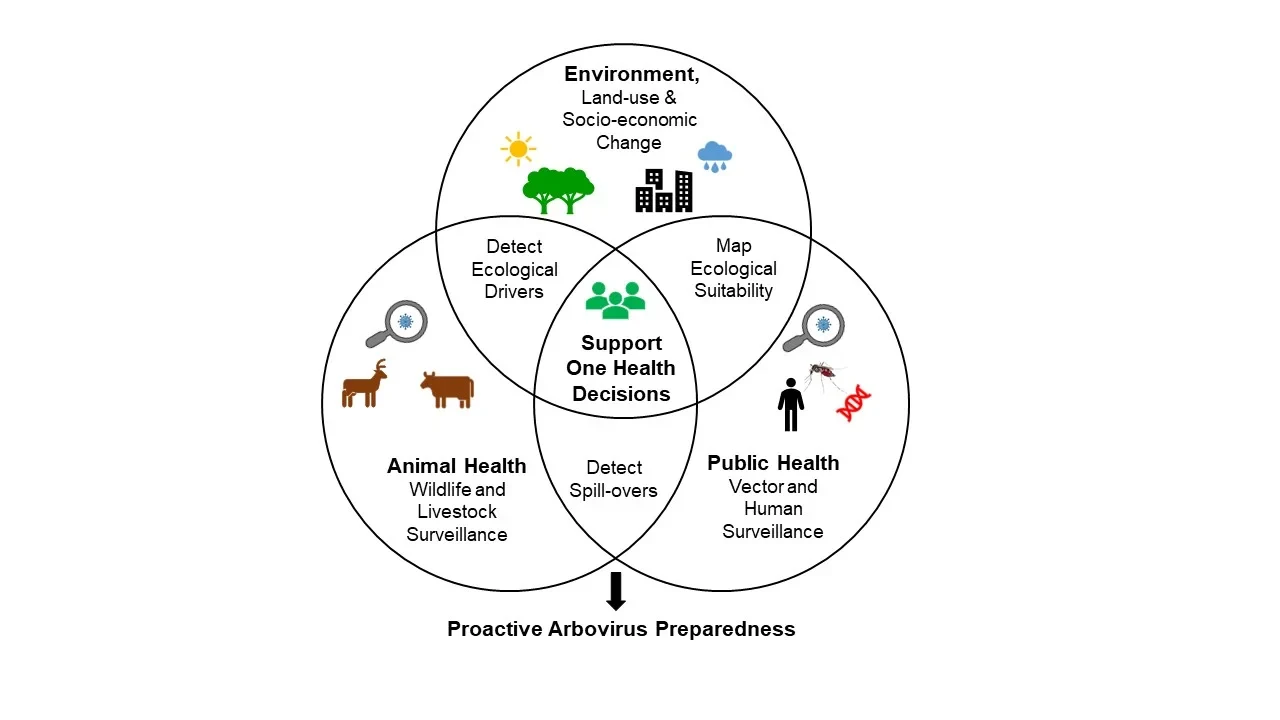
The research showed that changes in climate, land use, and socioeconomic factors influence where viruses and their mosquito vectors can survive. These factors also shape how viruses spread over time. Based on workshops with Ugandan experts, I demonstrated that a "One Health" approach, which brings together the human, animal, and environmental sectors, is more effective at reducing the risk of arboviral diseases than actions taken by individual sectors alone.
The main message of this research is that disease emergence is not random. By integrating ecology, viral evolution, and coordinated decision-making, we can better predict where future outbreaks may occur and identify the most effective prevention strategies.
Key takeaways
- Integrating health, veterinary, environmental, and socio-economic data can improve disease surveillance efforts in Africa.
- Strengthening the capacity of national and international One Health mechanisms to identify disease risk factors could help African countries prepare more effectively for outbreaks.