What is Hospice Tossou's research about?
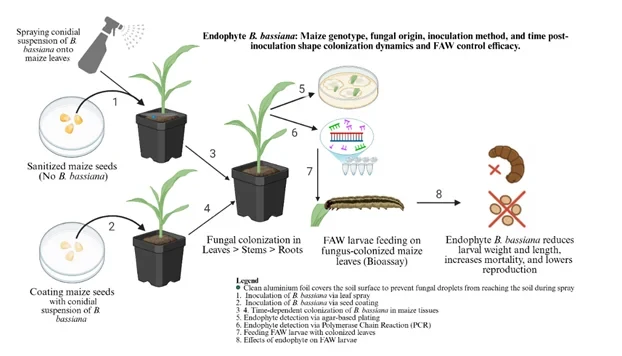
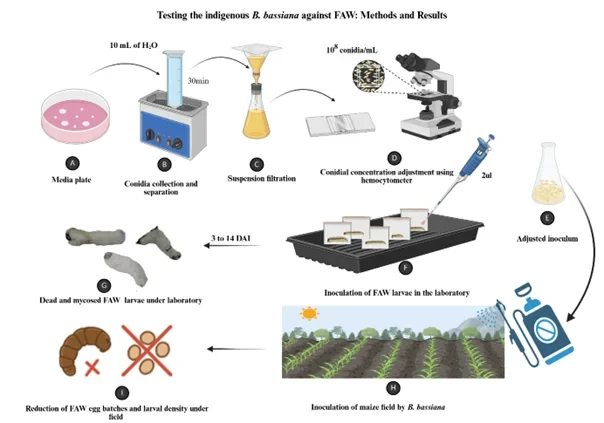
The Fall army worm is one of the most damaging pests of maize in Benin and across sub-Saharan Africa, reducing harvests and threatening farmers' incomes and food security. This study explored how farmers understand and manage the pest and tested a natural fungus, Beauveria bassiana, as an environmentally friendly control method. Surveys showed that although most farmers recognized fall army worm, many did not know when infestations begin, which often delayed control. Most farmers relied on chemical insecticides, while very few used alternative methods. Laboratory and field experiments found that one local fungal isolate, Bb115, was especially effective. It reduced the number of caterpillars and eggs on maize plants and was able to live inside the plants without causing harm. Maize plants colonized by the fungus reduced the survival, growth, and reproduction of fall army worm, particularly in local maize varieties. These results suggest that combining better farmer knowledge, suitable maize varieties, and beneficial fungi could provide a more sustainable and environmentally friendly way to manage fall army worm in Benin while reducing dependence on chemical pesticides.