11. March 2026

Counting the True Cost of food in export-oriented agricultural value chains Counting the True Cost of Food: ZEF-workshop with stakeholders and policymakers in Entebbe, Uganda

ZEF-workshop in Entebbe discusses how True Cost Accounting can help design business models that promote more sustainable foods systems

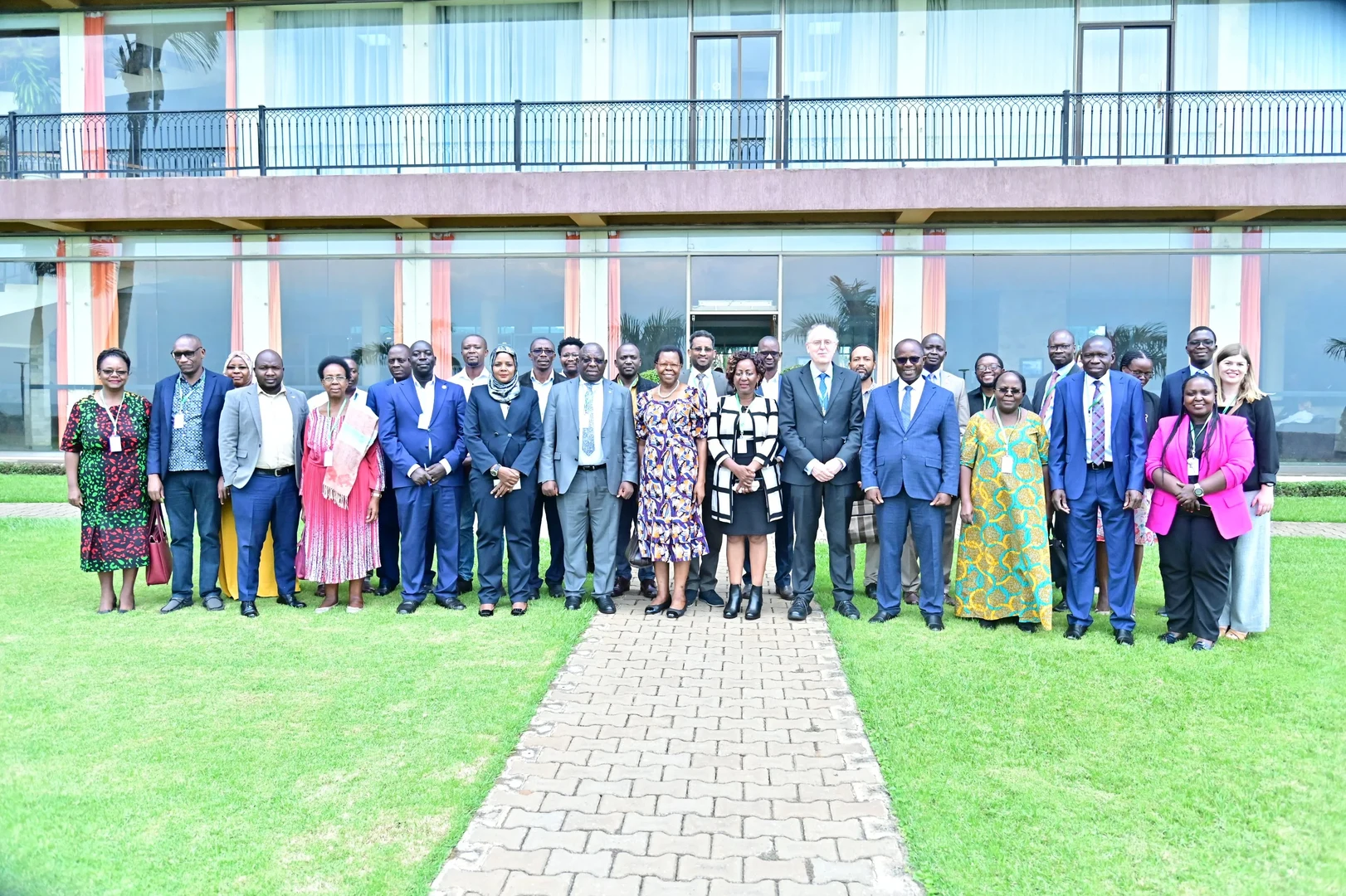
Researchers, policymakers, and representatives from agricultural export companies and farmer associations gathered in Entebbe, Uganda on February 25-26 2026, for a workshop on “The True Cost of Food: Policies for Sustainable Production of Coffee and Other Export-Oriented Crops in East Africa.” 

Participants of the workshop The True Cost of Food: Policies for Sustainable Production of Coffee and Other Export-Oriented Crops in East Africa in Entebbe, Uganda, Feb. 25-26, 2026
Participants of the workshop The True Cost of Food: Policies for Sustainable Production of Coffee and Other Export-Oriented Crops in East Africa in Entebbe, Uganda, Feb. 25-26, 2026 © Shamim
Download all images in original size The impression in connection with the service is free, while the image specified author is mentioned.
Please fill out this field using the example format provided in the placeholder.
The phone number will be handled in accordance with GDPR.

The discussions during the three-day workshop benefited from contributions by senior policymakers and experts, including Fred Bwino Kyakulaga, Uganda’s State Minister for Agriculture, Animal Industry, and Fisheries, Victoria Sekitoleko, former Minister of Agriculture of Uganda, and Rhoda Peace Tumusiime, former Commissioner for Rural Economy and Agriculture at the African Union Commission.

How True Cost Accounting can help design business models that promote more sustainable foods systems

Participants discussed how True Cost Accounting can be used to identify, measure, and potentially internalize social, environmental, or health externalities along agricultural value chains. A particular focus of the discussions was the persistence of hazardous child labor in agricultural production. By making the hidden costs of externalities, such as child labor, visible, True Cost Accounting can support policymakers, businesses, and other actors in designing policies and business models that promote more sustainable and equitable food systems.

Why fair cost-sharing matters for small-holder farmers

The discussions highlighted the importance of fair cost-sharing along value chains. Transitioning to more sustainable production systems often entails additional costs that cannot be borne by smallholder farmers alone. Participants emphasized that downstream actors, including processors, retailers, and consumers, must contribute through improved pricing, contracts, and co-investment in sustainable practices.

Workshop documentation available online

The workshop concluded that addressing the true cost of food is a necessary foundation for building more resilient, equitable, and sustainable export-oriented food systems. The insights and recommendations emerging from the discussions are documented in the workshop proceedings (see below under publication) and aim to inform ongoing policy debates and future research on sustainable agri-food systems.


The workshop was jointly organized by the Makerere University and ZEF within the framework of the FOODCoST project, which develops methodologies and policy tools to measure and internalise externalities in food systems and support the transition toward sustainable food production and consumption.


The FOODCOsT project is funded by the European Union’s Horizon Europe Framework Programme.

Bernard Bashaasha, Joachim von Braun, Rosemary Isoto, Luisa Müting, Friederike Schilling (eds.).The True Cost of Food: Policies for Sustainable Production of Coffee and other Export–oriented Crops in East Africa. Workshop 25-26th February 2026 in Uganda. https://www.zef.de/media-assets/downloads/true_cost_of_food_workshop_proceedings.pdf

Luisa Müting, ZEF.
Email: luisa.mueting@uni-bonn.de

Wird geladen