Governance and conflict

Governance and conflict

Collective decision-making and governance as well as the absence of appropriate governance structures have a tremendous impact on development processes.

The assessment of centralized as well as decentralized, functional, organizational and segmentary forms of governance arrangements is pivotal in addressing the challenges of natural resources management, including the prevention and management of conflicts. Moreover, inequality is a major concern calling for inclusive development approaches.

The sustainable use and management of natural resources are the major linking elements between this and the other research areas.
GC-1_Diaz-Espaillat_Thailand.jpg
© Diaz-Espaillat/ZEF

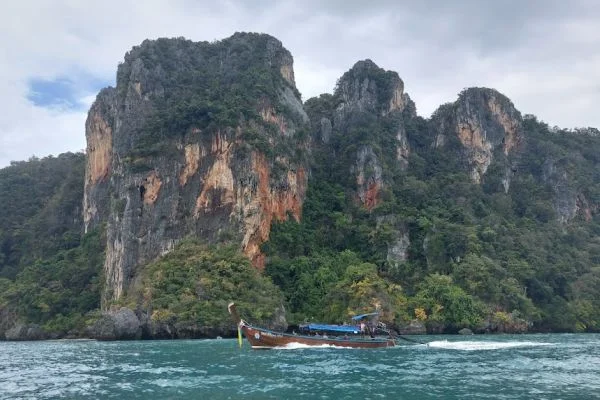
Krabi, Thailand. Tourism-driven narratives romanticize coastal landscapes while overlooking the environmental pressures and socio-economic vulnerabilities experienced by the local communities that sustain this industry. 
 

GC-2_Stellmacher_conducting-research.jpg
© Stellmacher/ZEF

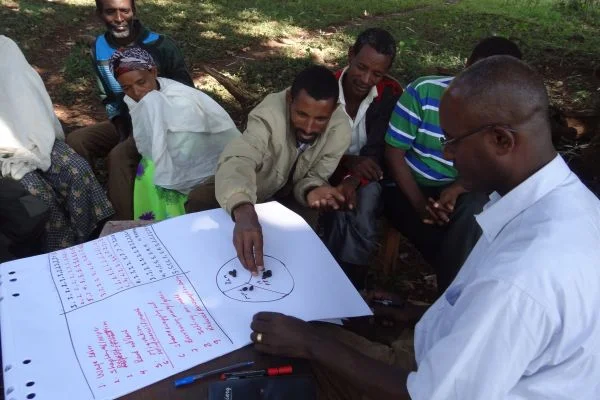
Photo taken during a transdisciplinary research project, involving local stakeholders in an Ethiopian village.
GC-3_Verleysdonk_rur-liv-and-agr.jpg
© Verleysdonk/ZEF

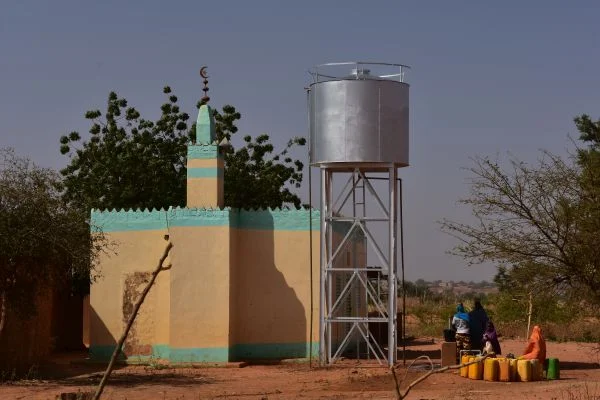
Rural scene in Niger. Africa's natural resources are highly contested among the world's global players, with the interests of local populations mostly being ignored.

ZEF Projects related to "Governance and conflict"

Keywords
Nature-based Solutions; biodiversity-climate synergies; Social dimension; participatory processes: Transdisciplinarity

Countries
Austria; Colombia; Côte d'Ivoire; Lebanon

Summary

The BioClimSocial global project aims to highlight the significance of the social dimension in the context of Nature-based Solutions(NbS) - as defined at the 5th United Nations Environment Assembly (UNEA 5.2): NbS are “actions aimed at protecting, conserving, restoring, and sustainably managing natural or modified terrestrial, freshwater, coastal, and marine ecosystems, which address social, economic and environmental challenges effectively and adaptively, while simultaneously providing human well-being, ecosystem services, resilience and biodiversity benefits”.  The project encapsulates the social dimension as a fundamental feature threading through the full NbS cycle of conception, planning, implementing measures/interventions and evaluating outcomes, at the local or regional level, through the lens of transdisciplinary research.

The ‘social dimension’ encompasses the views, needs and experiences of a diversity of actors/stakeholders across civil society, industry and academia, as well as the interrelationship of these actors/stakeholders -power relations, institutional arrangements, governance systems etc.- and explores how this aspect of the 'social dimension' facilitates meaningful co-creation. 

The project aims to complement existing NbS knowledge, tools and practice in respective sectors -agroforestry/forestry; coastal/marine; alpine/montane and urban - by exploring the state of play of NbS in regard to the social dimension and through integrative primary and secondary research, elucidating how the social dimension's impact, relevance, efficacy and efficiency must feed into stakeholder, participatory processes as a positive feedback loop. Furthermore, how this iterative process, underpinned by an acute awareness of how the social dimension may positively influence the NbS process from the conception phase onwards, can enhance and reinforce NbS sustainability and robustness. 

Thus, the overarching goal is to produce evidence of how one can enable win-win relationships between various actors/stakeholders in the context of biodiversity and climate change mitigation and adaptation with specific focus on applied research. 

In essence, the BioClimSocial project illustrates and exemplifies the endeavour of NbS best practice where, at the nexus of biodiversity and climate, lies the crucial underpinning of the social dimension.

Specific objectives of the project were:

  • To undertake transdisciplinary research that will lead to the development of a guideline (the ‘Guidance Report’). The purpose of this Guidedance Report is to provide a theoretical underpinning as well as practical recommendations for considering the social dimension in NbS.
  • To collaborate with four, active global NbS case studies to enrich the Guidance Report with “good practice” examples and lessons learnt through an exploration of their experiences in their application-oriented projects that address: restoring seagrasses in Colombia; urban greening in Lebanon; agroforestry practices in Côte d'Ivoire; and overforestation and pastoral restoration in the Austrian Alps.
  • To foster capacity building for future collaboration and potential research that expands on the current scientific foci. 

The BioClimSocial Project was undertaken by analysing the social dimension of synergistic climate-biodiversity NbS through two interlinking research packages:

Work Package 1 involved the undertaking of data collection on the features of the social dimension as an integral part of NbS research and implementation. The data sets were drawn from those NbS researchers applying transdisciplinary research. 

A mixed methodology analysis of data via surveys and interviews produced the project's empirical data; respondents were identified from a curated BioClimSocial NbS database of geographically diverse NbS study cases. The database represented four NbS sectors: agroforestry, coastal, mountainous and urban regions with a global reach across both the Global North and Global South. The questionnaire respondents, pooled from the database, responded to the three facets: NbS social principles, process and outcome.

Work Package 2 centred around the research and practice of four selected NbS case study partner groups. The learning from their evolving NbS cases, along with their contributions to WP1, fundamentally shaped the findings of the BioClimSocial Project. The four NbS case study partners, along with our selected Project Advisory Group (PAG) of experts, were part of an iterative process of knowledge co-production through transdisciplinarity to produce two BioClimSocial Project outputs - the Guidance Report on the Social Dimension of NbS and a peer-reviewed publication.

Work Package 3 and 4 constituted capacity building and project management activities, both of which were designed to support the ongoing and potential future research activities for our case study partners.

One of the most significant capacity-building events to take place, facilitating the exchange of ideas and the opportunity for intense deliberation among attendees, was at the Vilm (Island of Vilm, Germany) Workshop in May 2024, at the BfN premises -

BioClimSocial project for fostering applied research focussing on biodiversity and climate Peer exchange workshop -

A 3-day, in-person workshop, inviting NbS experts for an interactive peer-exchange with the focus on the social dimension of NbS through the iterative process of transdisciplinarity.

Our participants included the BioClimSocial case study partners, Project Advisory Group experts, a funding specialist and members of the BfN and ZEF- Uni Bonn teams.

Objectives:

  1. To understand the work to date of each of the NbS case study partners’ research and practice and exchange their findings on how to optimise transdisciplinarity;
  2. To document the commonalities and divergences in the social impacts and benefits of NbS, at any point along the NbS cycle;
  3. To make valuable contributions to the initial stages in the development of the NbS Guidance Report.
  4. To explore further funding opportunities in advancing their case studies with the emphasis on ‘co-creation with stakeholders.

Output: The workshop findings and key recommendations were to  provide fundamental data to contribute to both the Guidance Report and a co-authored scientific paper.  

    Main Cooperation Partners

    • Agroforestry: Prof. N’golo A. Koné and Dr. Kolotchèlèma Simon Silué, University Félix Houphouet Boigny & University Nangui Abrogoua, African Center of Excellence (CEA-CCBAD)
    • Alpine/Mountainous: Günther Schreder - researcher at the Department for Knowledge and Communication Management, and Nicole Hynek- researcher at the Department for Knowledge and Communication Management at Danube University Krems, Austria; Florian Schublach - Manager of the Ötscher-Tormäuer Nature Park
    • Coastal/Marine: Prof. Ernesto Mancero - Marine Biologist, Universidad Nationale de Colombia
    • Urban: Prof. Salma Talhouk - American University of Beirut; Carine Ghassibe and Nour Bassil - graduate students of Prof. Talhouk at the American University of Beirut, Lebanon

    Main Funding Partners
    Federal Agency for Nature Conservation (BfN), with funds of the German Ministry for the Environment, Nature Conservation, Nuclear Safety and Consumer Protection (BMUV) 

    Principal Lead at BfN

    • Irina Kozban

    Project Advisory Group (PAG)

    • Dr. Andre Mascarenhas
    • Dr. Sunita Chaudhary

    Duration of the Project
    Spring 2023 - November 2025

    ZEF Research Areas
    Global NbS in sectors of agroforestry, coastal and mountainous regions and urban greening. Stakeholder engagement and conflict resolution. Transdisciplinarity. Social Dimension of NbS 

    Team at ZEF

    • Jun.-Prof. Lisa Biber-Freudenberger (Implementing Academic Project Lead)
    • Vanessa Haines-Matos (ZEF principal researcher)

    Contact
    Jun.-Prof. Lisa Biber-Freudenberger, Phone.: +49-228-73-1726

    Keywords
    Doctoral Studies Support Program, Colombia, ZEF, DAAD, SDGs

    Countries
    Colombia, Germany

    Summary
    This bilateral doctoral studies support program on „Environmental peace building and development in Colombia“ of ZEF at the University of Bonn and the Universidad Nacional, Bogotá, Instituto de Estudios Ambientales (IDEA), will look at the nexus of natural resources, governance and conflict in Colombia. We will use innovative and integrative concepts, methods and instruments to explore interdependencies. The joint German-Colombian production of knowledge based on interdisciplinary exposure and integrative measures is the more important in a country in which the recently signed peace appraisal will be put to test by the way the society finds solutions for pressing issues related to conflictive extractive activities, environmental protection and not least the participation and inclusion of the population in decision making processes to reduce environmental conflicts.

    Rights and access to natural resources
    Territorial rights and access to natural resources are key elements to understand long-standing political and social conflicts in the world. In Latin America, their role is enhanced by many interconnected factors such as divergent world views on land and territory and consequential competing interests. This includes for example concepts of land and nature as livelihood with symbolic meaning vs. the notion of land and its resources as a commodity. Such factors are largely responsible for the increasing and unsustainable use of resources and exploitation of natural resources. This can be in the form of more extractive activities such as mining, agro-industries and monocultures with a destructive impact on the environment.

    Colombia’s case of conflict
    Colombia is a show case of a country in which territorial rights, land use and the extraction of natural resources have been deeply entrenched with diverse forms of violence. The long-lasting armed conflicts starting in the mid1960s between different guerrilla groups such as the FARC (Fuerzas Armadas Revolucionarias de Colombia, today Fuerza Alternativa Revolucionaria del Común) and ELN (Ejercito de Liberación Nacional) on the one hand and the consecutive Colombian governments on the other show the linkages between armed conflict and historically derived inequalities in terms of access to land and territorial distribution. In Colombia, this relation has not only led to the exploitation and destruction of the environment but also to the expropriation of land and displacement of rural population. In fact, Colombia is one of the earth’s five mega-biodiversity centers which makes the country the world‘s core biodiversity region and therefore a hotspot for its commodification.

    “Post-conflict” opportunity
    Currently, Colombia faces a unique historical challenge with the ‘post-conflict’ (posacuerdo), because the peace agreement with FARC and the peace negotiations with ELN seem to end the armed conflict. But the challenge lies in implementing strategies for a ‘sustainable peace’, which would need to address the unequal distribution of land, the legal pluralistic notions of land, respective claims for territorial rights and the sustainable use of ecosystems and natural resources rather than exploiting them arbitrarily. Nonetheless, the relations between the environment and the armed conflict in Colombia are manifold. Thus, the diverse ecosystems and natural resources may appear as the cause, the victim (deforestation, fumigation), or the beneficiary (through the protection and conservation of contested sites with high biodiversity) of these ongoing conflicts. At the same time, the environment and the way territory is distributed and used is at the core of any long lasting solution to the complex conflict.

    Interdisciplinary and transdisciplinary project approach
    This project needs and chose an interdisciplinary approach to deal with the complex setting. The different relations between the environment and the conflict in Colombia, the role land and access to natural resources play for the peace building process and how the environment can be protected in the long run while simultaneously balancing the different exploitation interests still need an interdisciplinary scientific exploration . Both the dimension of the destruction of the environment and the development of solutions to use and protect the environment and all the people therein (implementing an institutional set-up for land use planning, developing forms of alternative agricultural production, ecological-organic farming, tourism, etc.) need further analysis in order to fully understand human-nature relationships and the feedback mechanisms of the socio-ecological systems. Whether the commercialization of natural resources can be managed in a sustainable way depends to a large extent on the legal and institutional set-up and the way the affected population is involved in decision-making on strategies to use the common goods and develop the country. The future of peace in Colombia highly depends on sustainable, locally adapted and integrated solutions for land use and access to resources, to which highly qualified scientists can substantially contribute.

    Methodology

    • Development of an Interdisciplinary doctoral program addressing the SDGs
    • Creation of a research agenda addressing the SDGs

    Main Cooperation Partners

    • Institute for Environmental Studies (IDEA) in Bogotá, Colombia
    • Bonn International Center for Conversion (BICC)
    • University for Development Studies (UDS) in Ghana
    • UN System Staff College (UNSSC) - Knowledge Centre for Sustainable Development

    Main Funding Partners
    BMZ, DAAD

    Duration of the Project
    until December 2025

    Project Homepage
    https://dssp-colombia.org/

    Team
    at ZEF:

    • Eva Youkhana (project leader)
    • Dennis Aviles Irahola (coordinator)
    • Christian Petersheim (financial administration)
    • Carolina Tobón Ramírez (coordinator)

    Project Partners:

    • Carmenza Castiblanco Rozo (Project Leader IDEA)
    • Fernanda Barbosa dos Santos (Coordination Team IDEA)
    • Maria Fernanda Roncancio Mateus (Coordination Team IDEA)
    • Henry Zarate Ceballos (Data Manager)
    • Nicolás Pérez (Data Manager - SIAMI)
    • Jhody Katherine Sánchez Beltrán (Data Manager - OCA)

    Contact
    Prof. Dr. Eva Youkhana, Phone.: +49-228-73-4909

    Keywords
    Landscape heritage, Environmental changes, Heritage conservation, Cultural landscape futures, Eastern Africa

    Countries
    Ethiopia, Kenya

    Summary
    Designation of cultural landscapes as UNESCO World Heritage Sites with outstanding universal values defines a globally recognized status, beyond their local values. However, cultural landscapes are not static, and many of them, especially in Sub-Saharan Africa, experience strong local dynamics with massive environmental, economic and social changes and conflicts. This study, therefore, aims to understand UNESCO World Heritage Sites as ‘living’ landscapes that are shaped and transformed through local dynamics including context-specific socio-economic, cultural, environmental and political factors. The case studies will be Konso Cultural Landscape in Ethiopia and the Sacred Mijikenda Kaya Forests in Kenya, UNESCO recognized cultural landscapes in Eastern Africa. The concept of human-environment interactions in cultural landscapes, sustainability and the concept of intersectionality (especially, for the gender dimension) guide the analysis. The analysis and understanding of UNESCO World Heritage Sites as ‘living’ and changing cultural landscapes will contribute to develop approaches to maintain their sustainable futures.

    Methodology

    • Intergenerational change analysis of landscape values and indigenous conservation practices
    • Human-environment interactions, and land use and livelihood transition analysis
    • Meta-analysis based on case studies to contribute to academic discourses and policy discussion towards sustainable development and landscape conservation
    • Mixed methods approach: qualitative and quantitative data collection and analysis

    Main Cooperation Partners

    • Dilla University
    • Kenyatta University

    Main Funding Partners
    The Volkswagen Foundation

    Duration of the Project
    2022 - 2026

    Team

    • Asrat Gella (project coordinator)
    • Dr. Abiyot Legesse Kura
    • Dr. Eric Kioko
    • Dr. Asebe Regassa Debelo
    • Dr. Till Stellmacher
    • Dr. Muthio Nzau
    • Dr. Yimer Mohammed Assen
    • Dr. Yvonne Githiora
    • Dr. Abebe Lemessa Saka
    • Yesim Pacal

    Contact
    Dr. Asrat Gella, Phone.: +49-228-73-4916

    Summary
    The Malabo Montpellier Panel works to accelerate progress towards sustainable food systems transformation in Africa. It identifies areas of progress and positive change across the continent and assesses what successful countries have done differently. It identifies and analyses the most important policy and institutional innovations and programmatic interventions that can be replicated and scaled up by other countries.

    The Malabo Montpellier Panel, co-chaired by Dr. Ousmane Badiane (Executive Chairperson, AKADEMIYA2063) and Prof. Joachim von Braun (Distinguished Professor, University of Bonn), convenes 18 leading experts in agriculture, ecology, nutrition, and food security to facilitate policy innovation by African governments to accelerate progress towards sustainable food systems transformation in Africa.

    The affiliated Malabo Montpellier Forum provides a platform to promote policy innovation by using the evidence produced by the Panel to facilitate dialogue and exchange among high-level decision-makers on African food systems transformation, climate change adaptation, and mitigation. The Forum is co-chaired by H.E. Hailemariam Dessalegn, former Prime Minister of Ethiopia, and H.E. Assia Bensalah Alaoui, Ambassador at Large to His Majesty Mohamed VI, the King of Morocco.

    Main Cooperation Partners
    AKADEMIYA2063

    Main Funding Partners

    • The German Federal Ministry for Economic Cooperation and Development (BMZ)
    • The African Development Bank (AfDB)
    • The United States Agency for International Development (USAID)

    Publications

    • Malabo Montpellier Panel Brochure
    • Malabo Montpellier Panel Factsheet

    All other publications can be found on the project website.

    Duration of the Project
    01.01.2023 - 31.12.2026

    Project Homepage
    https://www.mamopanel.org/

    Team
    Panel Members

    Contact
    Prof. Dr. Joachim von Braun, Phone.: +49-228-73-1800

    Wird geladen