Innovation and science policy
Innovations can have different facets, ranging from technical and institutional innovations to societal innovations such as new governance structures or incentive schemes. Research on processes leading to the generation, local contextualization, implementation and adoption of innovations is key to developing policy recommendations.
This is closely linked to the other research areas but in particular provides application-oriented tools and approaches for the ‚real-life‘ situations of practitioners, policy-makers or potential end-users.
It comprises research on the perception of new societal and ecological challenges across different stakeholder groups, on information and communication technology utilization, and on effective awareness-raising and capacity-building to foster the implementation of promising innovations in societies.
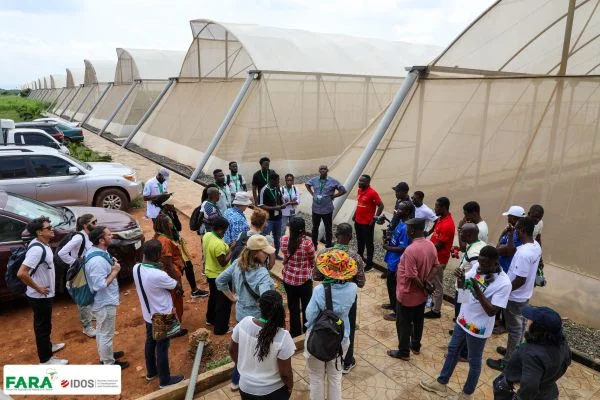
ZEF’s Interfaces project looks into 'Sustainable Land Management in Sub-Sahara Africa’. In the photo: Experts exchange and discuss their research at the Status Seminar in 2025.
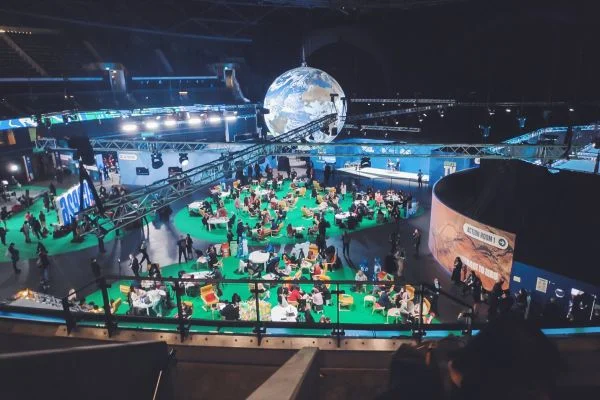
ZEF researchers take regularly part in COPs (in the photo: COP26 in Glasgow) to learn more about the Interface of Science and Policy Making. Read more on the LANUSYNCON website (see below under projects).
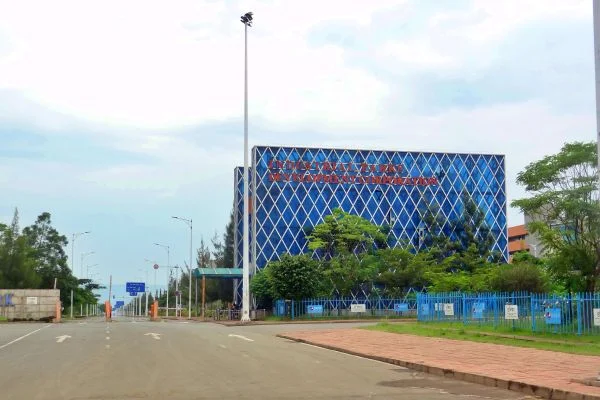
There is evidence that the economic success of Ethiopia’s industrial parks has come at a human cost. Hawassa Industrial Park (see photo) has become globally competitive in part because of its low-cost labor.
ZEF Projects related to "Innovation and science policy"
Keywords
Science-Policy-Practice Interface (SPPI); Nature-based Solutions (NbS); Savannas; Africa; Climate Change; Biodiversity
Countries
Côte d’Ivoire, Kenya, Germany
Summary
Africa’s sustainable development is tremendously challenged by climate change and biodiversity loss. In particular, the vast African savanna systems have largely been converted into managed landscapes, including agricultural and settlement areas. Savannas are very rich in biodiversity and provide indispensable ecosystem services. At the same time, savannas are the “breadbasket” of the continent providing 70% of Africa's cropland, 66% of cereal production and 80% of livestock farming. One of the greatest future challenges in savanna areas will be to adapt to the ever- changing environmental conditions, to conserve their biodiversity, maintain ecosystem functionality and ecosystem service provision, and concurrently provide food for the local population.
The African Climate and Environment Centre - Future African Savannas (AFAS) which is one of the global Centres of German Academic Exchange Service (DAAD) aims to build the critical mass and expertise to tackle these challenges, leveraging on working in the unique SPPI (Science Policy Practice Interface) space, adopting an inter- and transdisciplinary education and research approach with strong digital teaching, learning and research components, capacity development for the implementation of concepts and technologies as drivers of transformative change for the conservation and sustainable use of the savanna ecosystem following the Nature-based Solutions (NbS) approach. Indigenous and local knowledge combined with innovative new approaches based on research represent a great potential for sustainable development and achieving the SDGs in the region.
Methodology
AFAS aims to build capacity of young African scholars through a post-graduate program with masters and doctoral students who undertake an interdisciplinary study program with a curriculum that is co-developed together with stakeholders. The students and senior researchers undertake research on climate change adaptation and biodiversity conservation in the African Savannas. The students also engage in international exchange programs and internships. AFAS is a transdisciplinary project that works with stakeholders in the Science, Policy and Practice Interface.
Main Cooperation Partners
- The Center for Development Research (ZEF), University of Bonn, Germany
- The Institute for Climate Change and Adaptation (ICCA), University of Nairobi, Kenya
- The African Center of Excellence on Climate Change, Biodiversity and Sustainable Agriculture (CEA-CCBAD), Université Félix Houphouët-Boigny, Abidjan, Côte d’Ivoire
- The Global South Studies Center (GSSC), University of Cologne, Germany
Main Funding Partners
The German Federal Foreign Office
Duration of the Project
5 years (2021-2025)
Project Homepage
https://www.afas.africa/
Team
- Prof. Dr. Christian Borgemeister (ZEF, University of Bonn)
- Prof. Dr. Michael Bollig (GSSC, University of Cologne)
- Prof. Dr. Daniel Olago (ICCA, University of Nairobi)
- Prof. Dr. Souleymane Konaté
- Assoc. Prof. Dr. N'golo A. Koné
- Dr. Juliet Wanjiku Kamau ZEF, University of Bonn)
- Dr. Jan Henning Sommer (ZEF, University of Bonn)
- Dr. Gerda Kuiper (GSSC, University of Cologne)
- Ms. Lewnorah Ayieta (ICCA, University of Nairobi)
- Ms. Bárbara Meraz
Contact
Dr. Juliet Wanjiku Kamau, Phone.: +49-228-73-1838
Keywords
Agricultural technology, CGIAR, technology adoption, impact evaluation, smallholder farmers, institutional innovations
Countries
Vietnam
Summary
This project analyzes the dynamics of agricultural innovation in Vietnam with a particular focus on technologies and institutional innovations developed by CGIAR International Agricultural Research Centers. Relevant innovations are identified through a stocktake exercise. Innovation adoption and factors supporting or hindering uptake in the small-farm sector are examined with nationally-representative data, including household and community surveys, remote sensing, and DNA fingerprinting techniques. Impacts of innovation adoption on agricultural productivity, food security, poverty, gender dynamics, and various environmental outcomes are evaluated, combining econometric modeling with remote sensing and machine learning approaches. Qualitative interviews with farmers and other stakeholders are carried out to better understand the effects and their underlying mechanisms.
Methodology
- Stocktaking of relevant agricultural innovations
- Household, community, researcher, and stakeholder surveys
- DNA fingerprinting analysis to identify genetic innovations
- Remote sensing with satellite imageries to analyze land use
- Innovation adoption and impact analysis
- Panel data econometric modeling
Main Cooperation Partners
- Center for Development Research (ZEF), University of Bonn
- Institute for Food and Resource Economics (ILR), University of Bonn
- Vietnam National University of Agriculture (VNUA)
- Vietnam General Statistics Office (GSO)
Main Funding Partners
CGIAR Standing Panel on Impact Assessment (SPIA)
Duration of the Project
December 2024 – December 2027
Team
- Dr. Thanh Tung Nguyen (ZEF)
- Prof. Dr. Matin Qaim (ZEF)
- Prof. Dr. David Wuepper (ILR, Bonn)
- Prof. Dr. Thi Lan Nguyen (VNUA)
- Dr. Duy Linh Nguyen (VNUA)
- Assoc. Prof. Dr. Viet Long Nguyen (VNUA)
- Assoc. Prof. Dr. Viet Cuong Ha (VNUA)
- Dr. Truong Lam Do (VNUA)
- Dr. Quoc Trung Nguyen (VNUA)
Contact
Dr. Thanh Tung Nguyen, Phone.: +49-228-73-4902
Keywords
Land use, conflicts, synergies, Agenda 2030, agriculture, land degradation, biodiversity loss, agriculture, gender, climate change, health, Science Policy Interface
Countries
Africa particularly East Africa and Sub-Saharan Africa: Kenya, Tanzania, Egypt, Sudan
Summary
In LANUYSNCON, we try to answer urgent questions about the efficient and sustainable use of natural resources. This requires the conceptual and practical involvement of different perspectives, actors and research fields. Using case study in sub-Sahara Africa, particularly in Kenya and Tanzania, we examine the complex trade-offs between different Sustainable Development Goals (SDGs).
The aim is to provide results that will help to understand and consider impacts of land use decisions beyond the respective policy sector in order to promote coherent land use policies.
Methodology
- Dynamic Bayesian network analysis
- Decision modelling
- Structured interviews
- GIS analysis
Main Cooperation Partners
- Dr. David Amudavi (Biovision Africa Trust)
- Charles Meshack (Tanzania Forest Conservation Group)
- Professor Aletta Bonn (German Centre for Integrative Biodiversity Research /iDiv)
- Professor Dr. Jan Börner (Institute for Food and Resource Economics /ILR, the University of Bonn)
- Professor Dr. Pierre Ibisch (Center for Econics and Ecosystem Management, the University for Sustainable Development Eberswalde /HNEE)
- Dr. Thomas Dietz (Institute for Political Science /IFPOL, the University of Münster)
- Dr. Guido Schmidt-Traub (United Nations Sustainable Development Solutions Network /SDSN)
- Dr. Claire Brown (UNEP World Conservation Monitoring Center /WCMC)
- Dr. Cory Whitney (the University of Bonn’s Horticulture Institute)
Main Funding Partners
Policy Briefs
- Road Development and Conservation: Infrastructure Planning in Biodiversity Hotspots
by Philipo J. Mtweve, Pierre Ibisch & Lisa Biber-Freudenberger, ZEF Policy Brief No. 60
Download
- Diversification opportunities in Agriculture
by Hannah Kamau & Lisa Biber-Freudenberger, ZEF Policy Brief No. 61
Download
- Designing cost-effective incentives for Tanzania’s ecological corridors
by Qambemeda M. Nyanghura, Jan Börner & Lisa Biber-Freudenberger, ZEF Policy Brief No. 62
Download
- Strengthening Science – Policy Interfaces for Coherent and Sustainable Land Use
by Sara Velander, Lisa Biber-Freudenberger & Thomas Dietz, ZEF Policy Brief No. 63
Download
Publications
- Velander, S. (2025). From silos to synergy: Mapping institutional collaboration across global environmental science–policy interfaces. Environmental Science & Policy, 170, 104126. https://doi.org/10.1016/j.envsci.2025.104126
- Biber-Freudenberger, L., Bogner, C., Bareth, G., Bollig, M., Dannenberg, P., Diez, J. R., Greiner, C., Mtweve, P. J., Klagge, B., Kramm, T., Müller-Mahn, D., Moseti, V., Nyamari, N., Ochuodho, D. O., Kuntashula, E., Theodory, T., Thorn, J. P. R., & Börner, J. (2025). Impacts of road development in sub-Saharan Africa: A call for holistic perspectives in research and policy. iScience, 28(2), 111913. https://doi.org/10.1016/j.isci.2025.111913
- Mtweve, P., Eustace, A., Nyanghura, Q., Moseti, V., Kramm, T., Ibisch, P., & Biber-Freudenberger, L. (2025). An Integrated Decision Support Framework for Sustainable Road Planning in Biodiversity Hotspots. Nature Portfolio. https://doi.org/10.21203/rs.3.rs-7419361/v1
- Nyanghura, Q. M., Biber-Freudenberger, L., & Börner, J. (2025). Designing conservation-incentives for Tanzania’s ecological corridors : cost-effectiveness and behavioral determinants. https://agris.fao.org/search/en/providers/125217/records/68514f45aab9439e79fc1971
- Nyanghura, Q. M., Börner, J., & Biber-Freudenberger, L. (2024). Motivational drivers and the effectiveness of conservation incentives. Frontiers in Sustainable Food Systems, 8. https://doi.org/10.3389/fsufs.2024.1493672
- Biber-Freudenberger, L., Valander, S., & Mahmoud, N. A. M. (2024). Shaping sustainable futures through international agreements. Rural21 - the International Journal for Rural Development. https://www.rural21.com/english/a-closer-look-at/detail/article/shaping-sustainable-futures-through-international-agreements.html
- Souza, P. O., Callo-Concha, D., Kamau, H., De Souza Fernandes, L. C., Zabini, C., & Biber-Freudenberger, L. (2024). Are stakeholders aware of the contributions of ecosystem services for their Well-Being? A case study of a UNESCO geopark project in Brazil. Human Ecology, 52(6), 1203–1216. https://doi.org/10.1007/s10745-024-00558-6
- Nyanghura, Q. M., Biber-Freudenberger, L., & Börner, J. (2024). Incentives for biodiversity conservation under asymmetric land ownership. Ecological Economics, 219, 108152. https://doi.org/10.1016/j.ecolecon.2024.108152
- Kamau, H., Roman, S., & Biber-Freudenberger, L. (2023). Nearly half of the world is suitable for diversified farming for sustainable intensification. Communications Earth & Environment, 4(1). https://doi.org/10.1038/s43247-023-01062-3
- Wagner, N., Velander, S., Biber-Freudenberger, L., & Dietz, T. (2022). Effectiveness factors and impacts on policymaking of science-policy interfaces in the environmental sustainability context. Environmental Science & Policy, 140, 56–67. https://doi.org/10.1016/j.envsci.2022.11.008
- Velander, S., Martinelli, F. S., Sari, D. I., Ali, F., & Biber-Freudenberger, L. (2021). A dichotomy of domestic and academic pathways: challenges of motherhood in an international doctoral program on land science. Journal of Land Use Science, 17(1), 226–244. https://doi.org/10.1080/1747423x.2021.2015002
Duration of the Project
1 July 2020 to 30 June 2025
Team
- Jun.-Prof. Lisa Biber-Freudenberger
- Hannah Nyakio Kamau
- Philipo Jacob
- Qambemeda Masala Nyanghura
- Sara Velander
- Fatima Salaheldin Ali
- Nady Mahmoud
Contact
Jun.-Prof. Lisa Biber-Freudenberger, Phone.: +49-228-73-1726
Summary
The Malabo Montpellier Panel works to accelerate progress towards sustainable food systems transformation in Africa. It identifies areas of progress and positive change across the continent and assesses what successful countries have done differently. It identifies and analyses the most important policy and institutional innovations and programmatic interventions that can be replicated and scaled up by other countries.
The Malabo Montpellier Panel, co-chaired by Dr. Ousmane Badiane (Executive Chairperson, AKADEMIYA2063) and Prof. Joachim von Braun (Distinguished Professor, University of Bonn), convenes 18 leading experts in agriculture, ecology, nutrition, and food security to facilitate policy innovation by African governments to accelerate progress towards sustainable food systems transformation in Africa.
The affiliated Malabo Montpellier Forum provides a platform to promote policy innovation by using the evidence produced by the Panel to facilitate dialogue and exchange among high-level decision-makers on African food systems transformation, climate change adaptation, and mitigation. The Forum is co-chaired by H.E. Hailemariam Dessalegn, former Prime Minister of Ethiopia, and H.E. Assia Bensalah Alaoui, Ambassador at Large to His Majesty Mohamed VI, the King of Morocco.
Main Cooperation Partners
AKADEMIYA2063
Main Funding Partners
- The German Federal Ministry for Economic Cooperation and Development (BMZ)
- The African Development Bank (AfDB)
- The United States Agency for International Development (USAID)
Publications
- Malabo Montpellier Panel Brochure
- Malabo Montpellier Panel Factsheet
All other publications can be found on the project website.
Duration of the Project
01.01.2023 - 31.12.2026
Project Homepage
https://www.mamopanel.org/
Team
Panel Members
Contact
Prof. Dr. Joachim von Braun, Phone.: +49-228-73-1800
Keywords
Sustainable agricultural growth; food and nutrition security; targeting innovation investments; development of the agri-food sector; mechanization of skills; youth engagement; digitalization in agriculture; Africa, India
Countries
Benin, Burkina Faso, Cameroon, Ethiopia, Ghana, India, Kenya, Malawi, Mali, Nigeria, Togo, Tunisia, Zambia
Summary
Africa is increasingly emphasizing the role of innovation in development. The Science, Technology and Innovation Strategy for Africa 2024 takes into consideration the social, economic, and technological progress Africa has made over the last decade. Innovation for sustainable and high agricultural growth forms an important part of this ambition. The German Government has acknowledged this innovation potential and wants to support the improvement of food and nutrition security and sustainable agricultural value chains through Green Innovation Centers (GICs) in Africa and India implemented by the GIZ.
PARI brings together partners from Africa, India and Germany to conduct research on sustainable agricultural development, food systems transformation, and food and nutrition security in Africa and India.
Methodology
PARI pursues the following strategies:
- Analyses of the potential and impact of innovations (which innovations to invest in, where and for whom),
- Identification and assessment of supportive measures to strengthen the framework / policy conditions for the generation and dissemination of promising agriculture and rural areas development–related innovations, and
- Engaging with food, nutrition, agriculture and rural areas development policy makers to inform reforms and investment decisions that an improve job creation and food and nutrition security.
The core topics and thematic research priorities of the PARI have been identified in accordance with the African Union’s CAADP (Africa’s policy framework for agricultural transformation, wealth creation, food security & nutrition, economic growth & prosperity for all) as part of the New Partnership for Africa’s Development (NEPAD).
Drawing on these priorities as well as research findings by the PARI partners to date, research is structured in four themes:
Theme 1: Scaling innovations to promote multi-sectoral and sustainable approaches for small-scale producers
- Multi-sectoral approaches in small-scale production systems, incl. animal husbandry and aquaculture
- Promotion of sustainable, climate-smart production methods
- Targeted measures that specifically support and empower women
- Evaluation of experiences with the widespread dissemination of relevant technological and institutional innovations – Africa and India
Theme 2: Investment in infrastructure and skills as framework conditions for rural development and urban linkages
- Complementary investments in hard and soft infrastructure
- Innovative approaches to skill development for small-scale producers
Theme 3: Supporting sustainable and fair food systems through digital opportunities
Theme 4: Structural transformation of national agricultural innovation and research systems
Main Cooperation Partners
National partners in Africa and India:
- Forum for Agricultural Research in Africa (FARA)
- African Growth and Development Policy Modeling Consortium (AGRODEP)
- University of Hohenheim (UHOH)
- Akademiya2063
- National Partners in Africa
Main Funding Partners
PARI is funded by the German Federal Ministry for Economic Cooperation and Development (BMZ)
Duration of the Project
December 2014 – December 2025
Project Homepage
https://research4agrinnovation.org/
Team
- Prof. Dr. Joachim von Braun
- Prof. Dr. Assefa Admassie
- Dr. Heike Baumüller
- Dr. Bezawit Beyene Chichaibelu
- Dr. Amy Faye
- Friederike Schilling
Contact
Prof. Dr. Joachim von Braun , Phone.: +49-228-73-1800
Keywords
Digital Farming Technologies, Robotics, Public Perceptions, Crop Farming Systems
Countries
Germany
Summary
Digital technologies are changing agricultural production systems and will characterize agriculture in the future. Autonomous machines (robots), for example, strongly deviate from traditional agricultural images and farming practices. The main interest of this project is to analyze and better understand society’s attitudes toward the increasing digitalization in agriculture. This project is part of the PhenoRob Excellence Cluster at the University of Bonn.
More specifically, this project aims at: (1) Exploring what citizens know about digitization and automation in agriculture and how they perceive current developments, (2) outlining scenarios of what agriculture, especially crop farming, could look like in the future and (3) combining these pieces of informations into an overall picture with the experiences from the practical development of machines and models in the PhenoRob project and farmers' perspectives regarding new technologies. Results may help to improve public communication around new digital farming technologies.
Methodology
- Online surveys and experiments with German citizens
- Multivariate statistical analysis methods
Main Cooperation Partners
DFG (Deutsche Forschungsgemeinschaft through PhenoRob Cluster of Excellence)
Duration of the Project
2022 - 2025
Project Homepage
https://www.phenorob.de/cp-6-technology-adoption-and-impact/
Team
- Hendrik Zeddies
- Prof. Dr. Matin Qaim
- Prof. Dr. Gesa Busch (University of Applied Sciences Weihenstephan-Triesdorf)
- Dr. Martin C. Parlasca
Contact
Hendrik Zeddies, Phone.: +49-228-73-
Keywords
bioeconomy, sustainability, governance, biotechnology, South America
Countries
Argentina, Brazil, Uruguay
Summary
The Southern Cone of South America is one of the most important world regions for the provision of bio-based feedstock worldwide with many countries in the region currently undergoing dynamic changes in various bioeconomic sectors. Despite the region’s enormous potential for sustainable bio-based transformation, promoting environmentally responsible and equitable bioeconomic change remains a major governance challenge. This project focuses on the emergence and sustainability performance of the bioeconomies from Argentina, Brazil, and Uruguay and aims to analyze bio-based initiatives from a political sciences and agricultural economics perspective.
The planned research seeks to inform governmental and non-governmental, including private, decision-makers in South America and beyond about entry points for action towards promoting climate smart bio-based innovation processes that safeguard rural employment and the equitable distribution of the benefits and costs of bio-based transformation. Through strong partnerships with Universities in the Southern Cone and engagement at the science-policy interface, the project will strengthen international collaboration and its impact in the study regions.
Methodology
(1) Impact evaluation analysis of national bioeconomy policies
(2) Value chain and value-web analysis
(3) Modeling of land use change and GHG emissions
(4) Comparative case studies
(5) Qualitative data analysis
Main Cooperation Partners
- Universität Münster
- Universidade Federal de Minas Gerais (UFMG)
- Universidad Austral
- Universidad ORT Uruguay
Main Funding Partners
BMEL
Publications
See homepage
Duration of the Project
2020 - 2026
Project Homepage
https://sabio-project.org
Team
- Prof. Dr. Jan Börner
- Prof. Dr. Thomas Dietz
- Dr. Jochen Dürr
- Dr. Karen Siegel
- Carol Bardi
- Maria Eugenia Silva Carrazzone
- Daniela Gomel
- Daniel Kefeli
- Pablo Mac Clay
- Serena Olivera
- Laura Rojas
- Guilherme Stein
- Trevor Tisler
Contact
Dr. Jochen Dürr, Phone.: +49-228-73-4467
Keywords
Vegetable production and consumption, Healthy diets, Micronutrients, Food production technologies
Countries
Germany, Ghana, other countries in Africa
Summary
African countries will need to significantly increase their production and consumption of vegetables to address malnutrition and ensure access to healthy foods for the growing population. This is a major challenge, especially in the context of climate change, as heat, water scarcity, and increasing problems with plant diseases and pests make it difficult to increase productivity in the open field. Greenhouse vegetable production could be an important part of the solution for both urban and rural areas. The START project develops new greenhouse technologies ( “deep water cultivation” techniques) for efficient production of various types of vegetables. Research and testing grounds are established at the University of Bonn, considering current and future conditions in Africa.
Ghana is used as one country example. ZEF researchers collect comprehensive data from rural and urban households in Ghana to analyze the role of various types of vegetables for people’s diets and livelihoods and how production and consumption may potentially change through the new greenhouse technologies. Preferences for different local and exotic vegetables as well as the potential acceptance of new production technologies are also investigated. Based on various data sources, future scenarios in which new types of greenhouses produce more vegetables at affordable prices and with less seasonal variation are developed and analyzed in terms of their impacts on nutrition, health, socioeconomic development, and environmental sustainability.
Main Cooperation Partners
- University of Bonn, Institute of Crop Science and Resource Conservation (INRES)
- University of Ghana
- RWTH Aachen
- Bio Innovation Park Rheinland
Main Funding Partners
BMBF
Duration of the Project
04/2023 - 03/2027
Team
at ZEF:
- Prof. Dr. Matin Qaim (lead)
- Dr. Martin Parlasca
- Elisa Langella
- Benjamin Bonzo
at INRES (Sustainability Campus Klein-Altendorf):
- Prof. Dr. Ralf Pude
- Dr. Marcell Moll
at University of Ghana:
- Prof. Dr. Felix Asante
Contact
Prof. Dr. Matin Qaim, Phone.: +49-228-73-1847