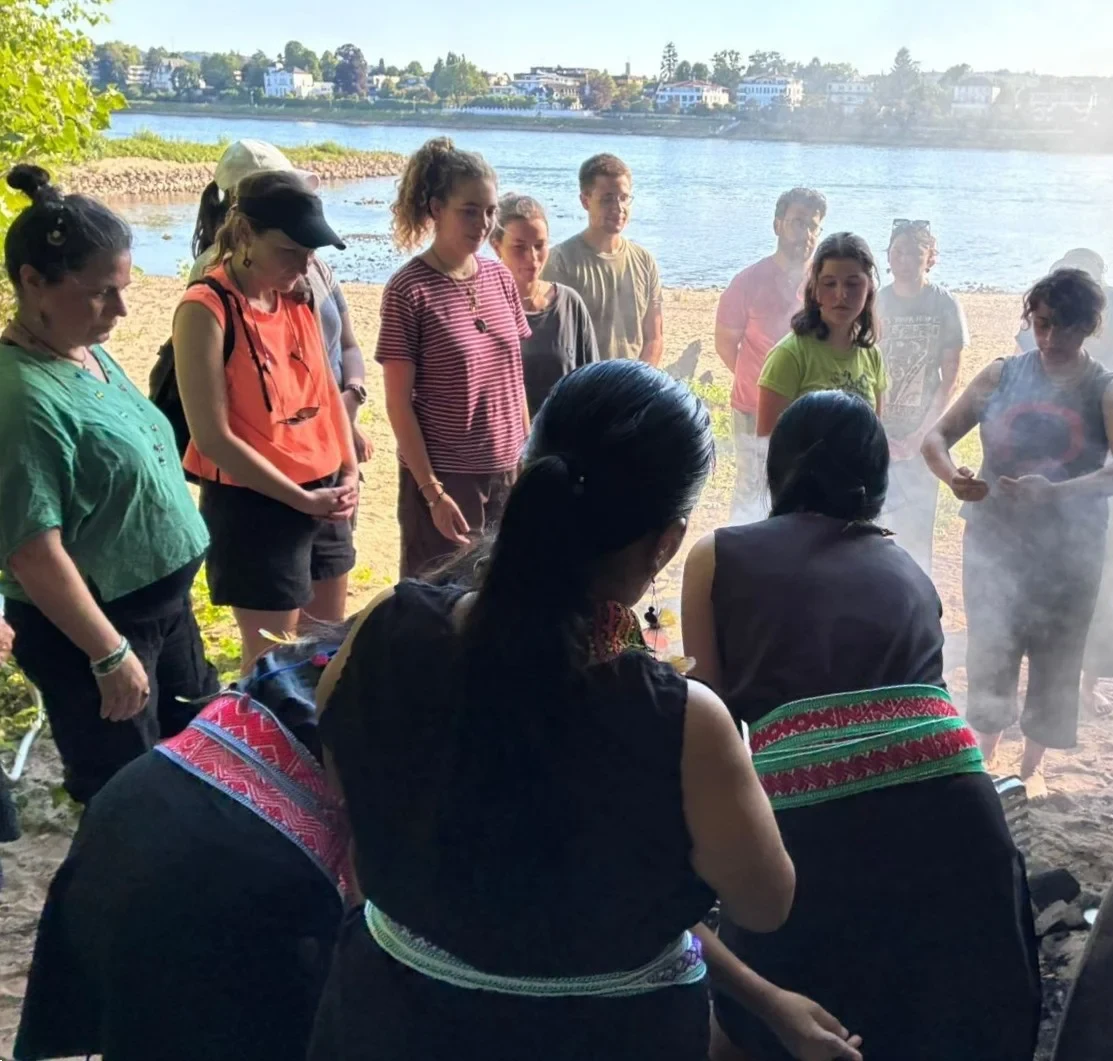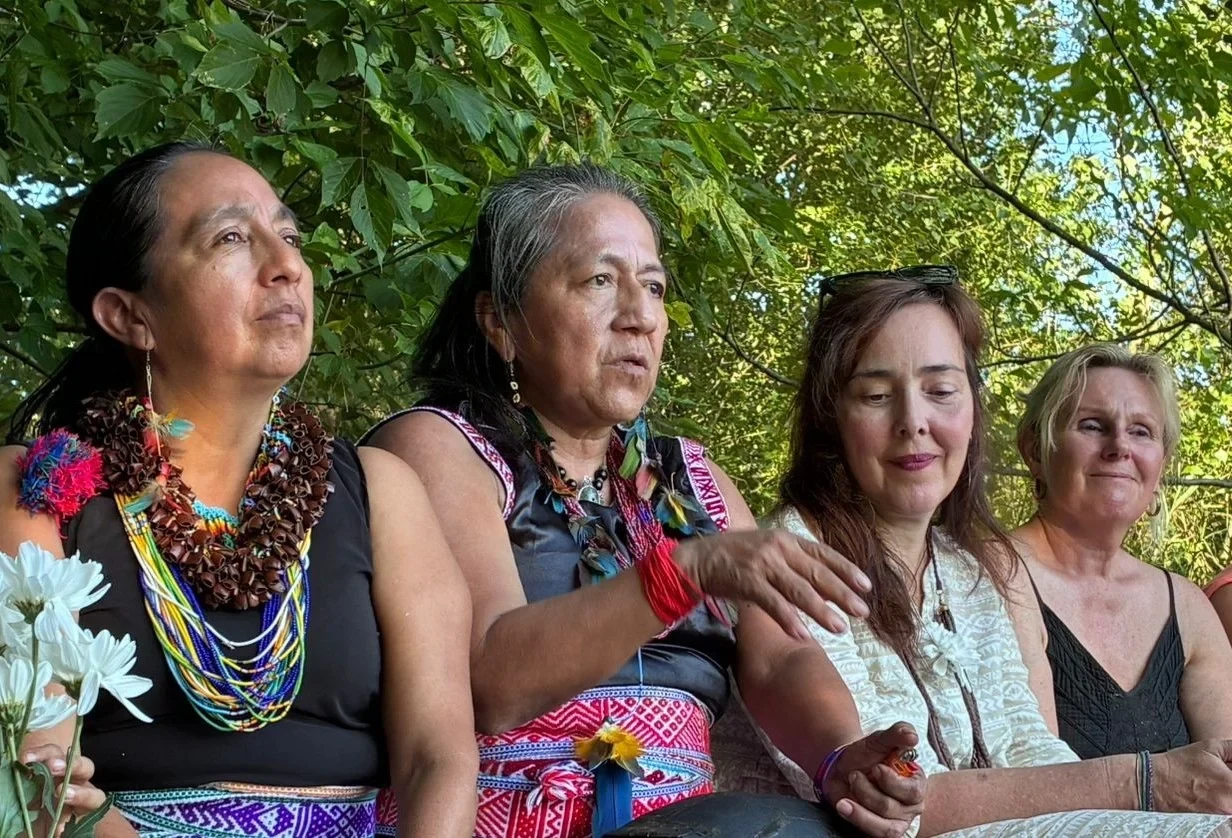
The Iakumama ritual on the Rhine riverside was a remarkable trans-disciplinary event that brought together scientists and researchers from a wide range of academic disciplines — including ecology, anthropology, philosophy, and the arts.
The collective ceremonial act centered on “healing the water”.
At the heart of the ritual was an invitation to open a genuine dialogue between Inga indigenous knowledge, which is rooted in deep relational and spiritual understandings of nature and Western academic knowledge. The latter tends to approach the natural world through another "cosmo-vision". Rather than placing these two knowledge systems in opposition, the event sought to hold them together in conversation, allowing each to illuminate and challenge the other.
The ritual unfolded as a trans-disciplinary encounter that deliberately crossed and blurred the boundaries between academic fields, between science and spirituality, and between researchers and participants.
So in the around 30 people who attended the event were not merely observers studying an indigenous practice from the outside; they were invited to engage, be present, and to allow it to reframe their own ways of seeing.
The central concept animating this dialogue was environmental peace — a notion that goes beyond the absence of ecological conflict to suggest a more profound reconciliation between human communities and the living world. Environmental peace, as explored through the Iakumama ritual, points toward a condition in which different peoples, species, and ecosystems can coexist with dignity and mutual care — and in which knowledge itself becomes a tool not of domination over nature, but of listening to it.
By staging this encounter on the Rhine — one of Europe's most iconic and historically burdened rivers — the ritual also invited reflection on what it means to restore not just the ecological health of a waterway, but the ethical and relational bonds between human societies and their river environments.