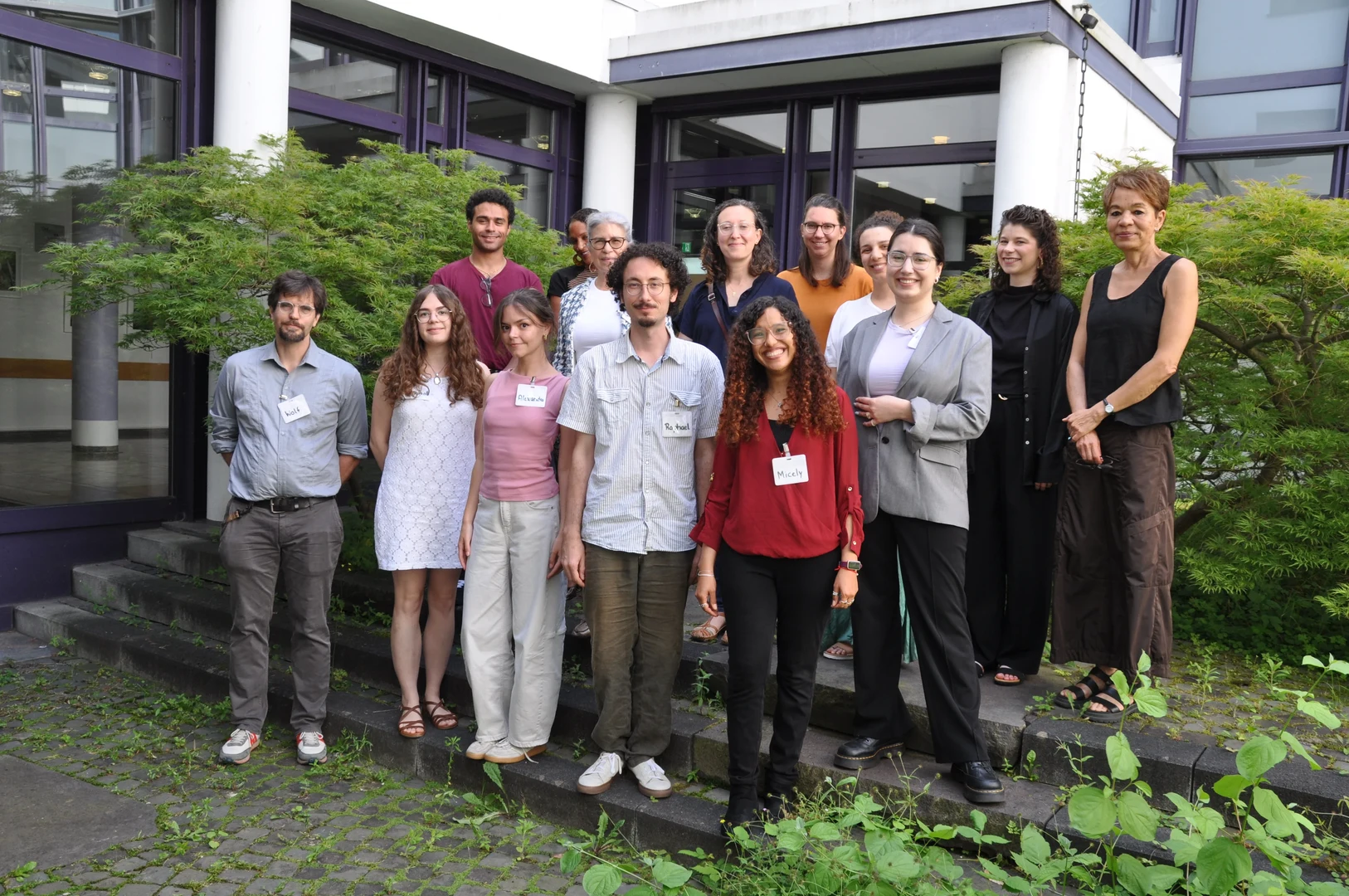
Organized around the conceptual triad of connection, bond, and fracture, drawn from the foundational work of Édouard Glissant and Antonio Benítez-Rojo, the symposium examined how these modes of relationality have shaped Caribbean thought, identity, and narrative across centuries and geographies. Four panels brought together perspectives on colonial archives and epistemologies, linguistic and cultural memory, transnational mobilities and ruptures, and the counter-narratives through which Caribbean actors have asserted agency, from eighteenth-century historical texts to contemporary digital decolonization initiatives.
The symposium featured two keynote lectures. Tessa McWatt (University of East Anglia), and Dr. Jean-Marie Théodat (University Paris 1 Panthéon-Sorbonne).
Presentations were delivered by Hannah Leah Neugebauer (Johannes Gutenberg University Mainz), Dr. Wolf Behnsen (Hanover), Dr. Johana Caterina Mantilla Oliveros (University of Bonn), Raphael Dohardt (FAU Erlangen-Nuremberg), Joanne G. Johnson (Trinidad and London), Alexandra Savard-Chambard (Sorbonne Université), Ronja D. Quast (University of Koblenz), Ethol Exime (State University of Londrina), Matthew Monrose (McMaster University), and Helen Atkins (University of the West Indies).
The symposium was organized by ZEF junior researher Micely Díaz Espaillat, Norah El Gammal, and Dr. Johanna Caterina Mantilla Oliveros, with the support of the Center for Development Research (ZEF), the Department of Anthropology of the Americas, University of Bonn, and the European University Viadrina.