Main take-aways from Anna's research:
- In recent years, increasing research has shown that urban waters like rivers, lakes and ponds (“urban blue spaces”) have positive effects on human health and well-being, similar to urban green areas.
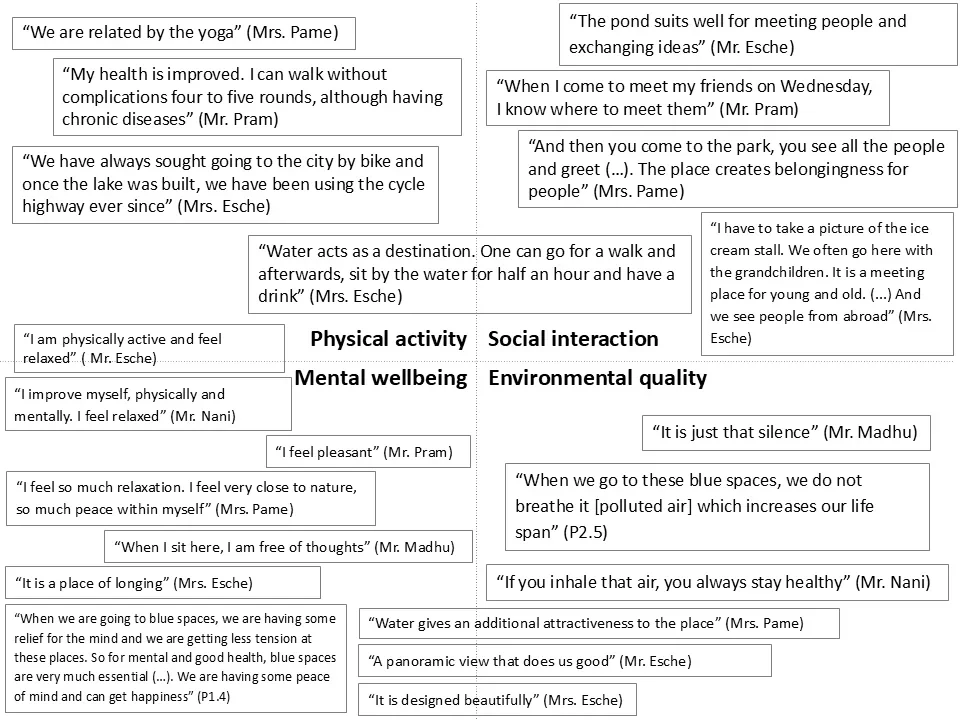
- Those spaces promote physical activity and social interaction, improve mental health, and protect against environmental health risks.
- However, many questions remain, for example, how older people (aged 65 years and above) – as the fastest growing population group worldwide – use and experience those ‘potentially therapeutic landscapes’.
- By applying a predominantly qualitative research approach called photovoice, this study examines the blue space-health relationship of older people in two cities: Ahmedabad (India) and the Ruhr Metropolis (Germany).
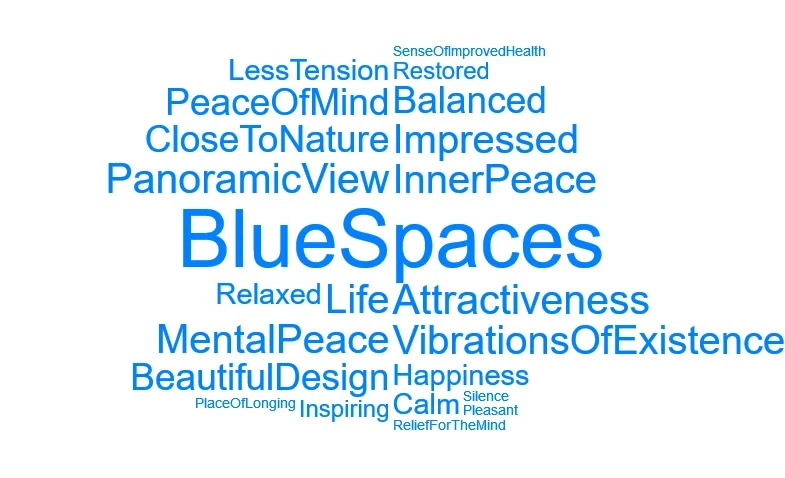
- The results show that older people experience diverse health benefits from blue space visits.
- The most important benefit is improved mental health, such as relaxation and stress reduction, followed by physical activity and social interaction.
- However, there are also challenges associated with older people’s blue space use, most notably obstacles to accessibility, maintenance difficulties and a lack of amenities/insufficient blue space quality.
- Overall, the study highlights that blue space use can contribute to health and well-being in later life and provides diverse recommendations for action.
Anna's take on her research:
"I happened to be the author of this thesis, but there have been many hearts and minds beyond whom I express my sincere gratitude for their contributions to this work. Being able to do this PhD in a supportive environment has been a privilege for which I am very thankful. More than advancing my research skills, it contributed in an unforgettable way to my personal development and my perspectives on life. As my research has shown that exposure to waters (blue spaces) can have significant contributions to healthy aging and to health and well-being in all age groups, there is one recommendation in the words of a study participant to share: “If there is time, sit there and enjoy life!” I want to thank ZEF for its support and that of their collaborating academic institutions who have hosted the graduate school ‘One Health and Urban Transformation’.