Background
The Right Livelihood College (RLC) is a global transdisciplinary education and research initiative of universities and the Right Livelihood Foundation, widely known as the ‘Alternative Nobel Prize’. The RLC Campus in Bonn is based at the Center for Development Research (ZEF), University of Bonn, and funded by the DAAD with funds from the Federal Ministry for Economic Cooperation and Development (BMZ).
About the workshop
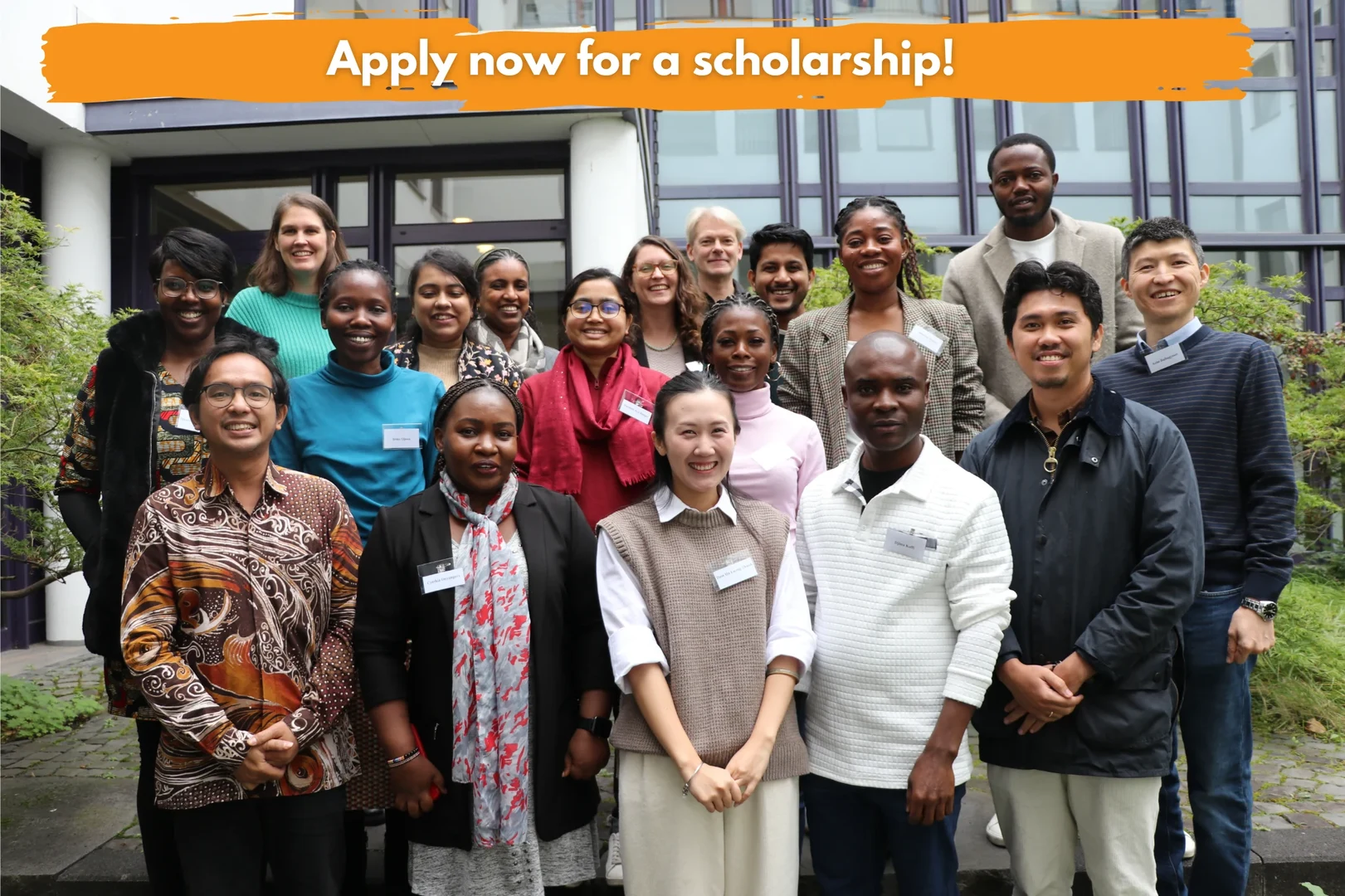
The workshop will take place in Bonn from October 5 (arrival date in Bonn) to October 8 (departure date from Bonn), 2026. PhD students and senior experts will be participating together with a Laureate of the “Alternative Nobel Prize” and other invited experts. Workshop language will be English.
Rural development, sustainable agriculture and local livelihoods have become ubiquitous notions in practice and sciences across the world. Beyond producing (more) food for growing populations and the conservation of ecosystems, sustainable agriculture has a high potential as an agent for positive rural transformation and pro-poor growth in many countries of the so-called Global South. However, the prevalent paradigm of economic development, often coupled with agricultural industrialization, leads to massive repercussions on the sustainability of rural systems and on farmers’ livelihoods. Systems are changing rapidly and immensely. Hence questions have to be addressed on the current and future role of rural livelihoods and agriculture in the context of economic growth, the conservation of ecosystems and food production - and generally on the future of rural areas in the so-called Global South as such.
Upon this backdrop, the workshop will provide remarkable case studies from rural areas in Africa, Asia and Latin America, conceptual approaches and current discourses. PhD students will have the opportunity to present and discuss their own research work in a cohesive transdisciplinary way by building on each participant’s expertise and experiences.
The workshop has the following objectives:
- to strengthen knowledge and understanding of concepts and methodological approaches,
- to critically assess different pathways of agriculture, local livelihoods and rural development,
- to present own case studies from Africa, Asia and Latin America,
- to promote transmission of expertise and experience as well as networking between PhD students, an “Alternative Nobel Prize” Laureate and other experts from around the world.