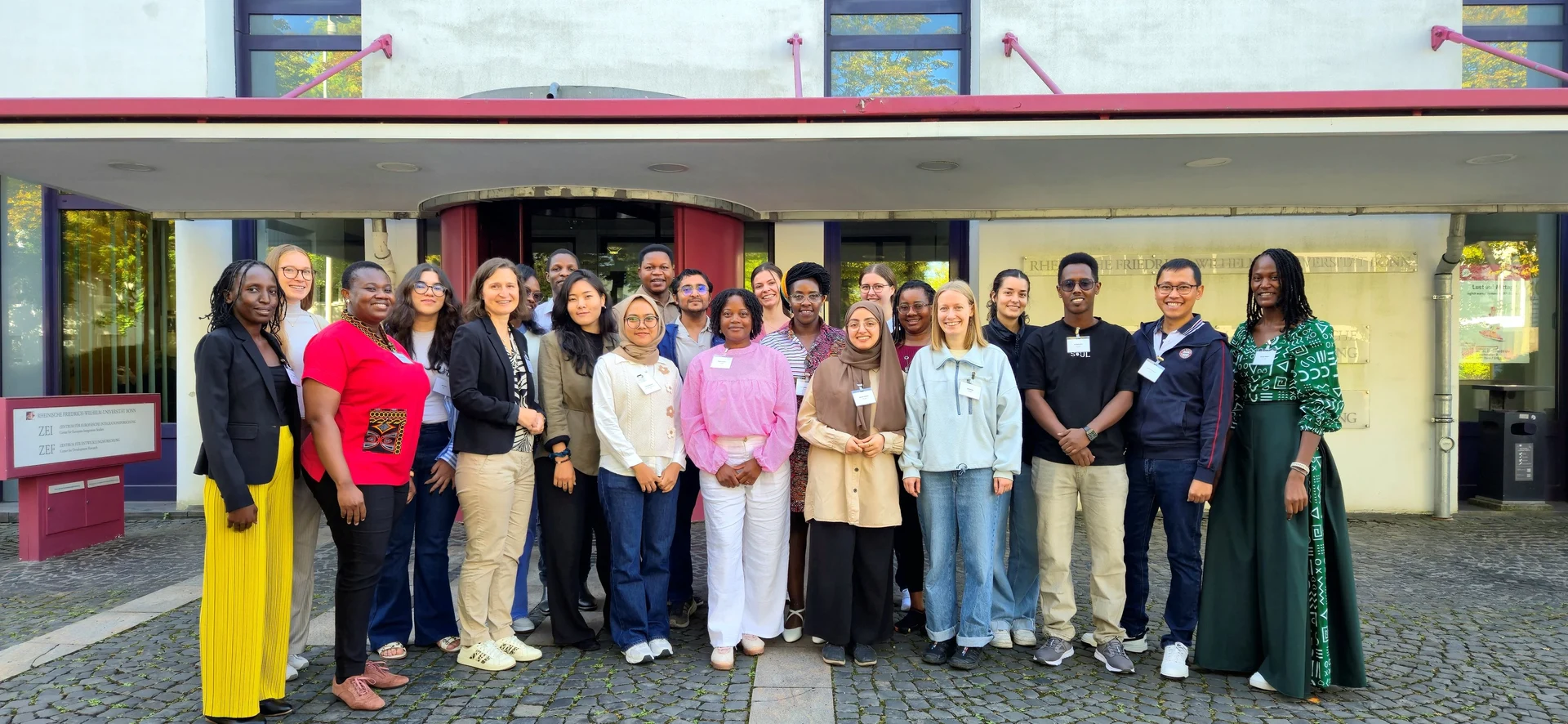
Key contributions and take-aways
- The summer school sparked discussions on dietary assessment methods, analyzing dietary patterns, modeling data from cohort studies, and implementing nutrition interventions.
- Prof. Danquah enlightened the participants on the general principles of nutritional epidemiology, while Annika Steffan (University of Bonn) led the discussions on dietary assessment methods, including the use of the NutriDiary App.
- On dietary data analysis, Dr. Daniela Nickel (German Institute of Human Nutrition Potsdam-Rehbruecke, DIfE) provided an overview of key concepts and approaches for examining diets, while Dr. Lukas Kurniawan (ZEF) introduced exploratory approaches.
- Karen van de Locht (University of Bonn) discussed a priori methods and Prof. Danquah explained the hybrid methods giving insights on combining data-driven and hypothesis-based techniques in dietary pattern analysis.
Special focus: cohort studies
- The participants dived into world-renowned prospective cohort-studies, facilitated by Prof. Gertraud Maskarinec (University of Hawai'i Cancer Center). Prof. Maskarinec enlightened the participants on diet-disease-associations in prospective cohort studies, while
- Dr. Katharina Nimptsch (Max Delbrück Center for Molecular Medicine) introduced the techniques of federated data analysis.
- Dr. Sven Knüppel (German Federal Institute for Risk Assessment, Bundesinstitut für Risikobewertung (BfR)) wrapped up the day by exploring how dietary changes over time can be modeled in cohort studies.
Final sessions: implementation is crucial
- The final sessions were led by Prof. Kristi Annerstedt (Karolinska Institutet Stockholm), Dr. Gaston Sorgho (The World Bank Group), Prof. Danquah, and Dr. Jacob Burns (Technische Universität München), who connected implementation science, policy translation, nutrition intervention trials and quasi-experimental approaches.