Gender
Gender inequalities deter human development in multiple areas such as education, employment opportunities, health, and environmental sustainability. Moreover, gender-based discrimination intersects with other types of discrimination; for example, those based on ethnicity or migrant status. In the end, they all result in systematic patterns of subjugation and suffering for millions of human beings. Sustainable development cannot therefore be pursued, let alone achieved, without a rigorous gender perspective in all research and development work.
Past and present ZEF research projects have looked at gender differentiations in education, migration, income generation and climate change adaptation, among others. ZEF has committed to making gender-sensitive research more systematic through, for example, its ZEF Gender Group regular events. Other recent actions include the increased visibility of gender implications in research in the Ethical Clearance document and the increasing inclusion of gender perspectives and intersectional analysis in doctoral/junior research projects.
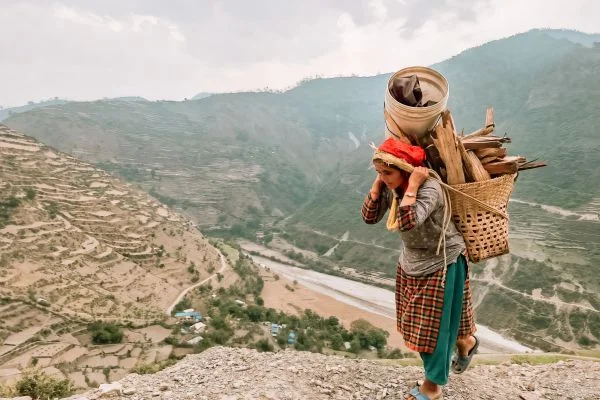
Woman carrying firewood in Nepal. In many villages, women manage entire farm operations alone. But they lack ownership, as patriarchal landholding structures deny them legal rights and formal power.
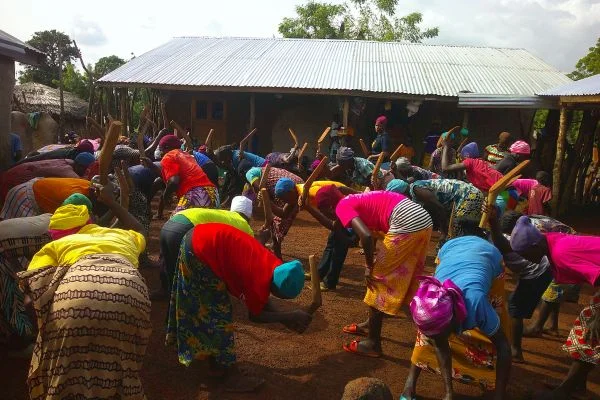
Women in a Ghanaian village. ZEF research explores the gendered roles of men and women in agriculture in Northern Ghana.
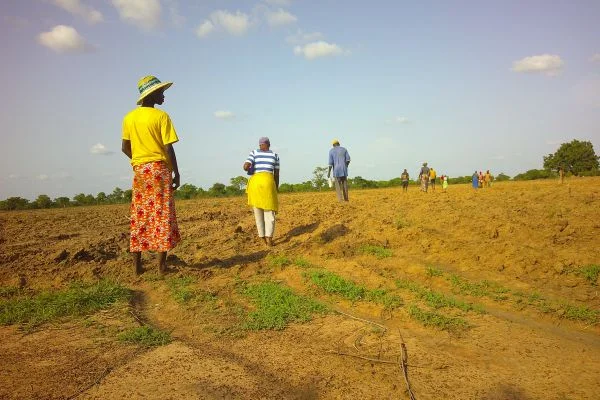
Koduzhegu, Northern Region, Ghana. ZEF research looks into modes of collaboration between men and women throughout the farming season.
ZEF Projects related to "Gender"
ALIMUS – Climate-sensitive nutrients, undernutrition and malaria
Changemaker – Promoting co-designed sustainable health interventions with young changemakers for reduced risk of non-communicable diseases (NCDs) in urban Burkina Faso, Kenya and Tanzania
ClimapAfrica – Climate change adaptation and coping strategies of smallholder fisherfolks along the Ghana Volta Lake
COPLANT – COhort on PLANT-based diets Study in Germany and Austria
Food system changes for healthy and sustainable diets in China
HealthyDiets4Africa – Combating malnutrition in Africa through diversification of the food system
INTERFACES – Supporting Pathways to Sustainable Land Management in Africa
IPTi Follow-up – Multi-center, prospective cohort study in Ghana on early-life exposure to malaria and nutrition-related non-communicable diseases in adult life
Local Dynamics and Integration of UNESCO World Heritage Sites of Outstanding Universal Value: Evidence from Cultural Landscapes in Ethiopia and Kenya
Malabo Montpellier Panel
OPTIMA – Omics Approach for Personalized Prevention of Type 2 Diabetes Mellitus for African and European Populations
PASTURES – Protected Areas for SusTainable nUtrition REsearch in Somaliland
RODAM – Research on Obesity and Diabetes among African Migrants
Sustainable dietary weight loss in Ouagadougou: A family-based, randomised, controlled trial for the prevention of type 2 diabetes