Water resources (management)
In many regions of the world water resources are being overexploited and polluted. In addition, severe floods and droughts are putting food security, the natural environment and people’s health at risk. These developments call for a thorough re-thinking of current water management strategies. Especially when we look at future challenges related to climate change and an increasing competition for water resources.
ZEF has longstanding experience in water-related research, especially in Central Asia and Africa. ZEF’s strength lies in linking different dimensions by applying interdisciplinary approaches and bridging gaps between stakeholders by using transdisciplinary approaches. Moreover, ZEF has a strong international research and stakeholder network.
ZEF is a member in the Bonn Water Network.

TextQargha Lake, Kabul, Afghanistan. ZEF research shows how climate change has been affecting people's livelihoods in the country.
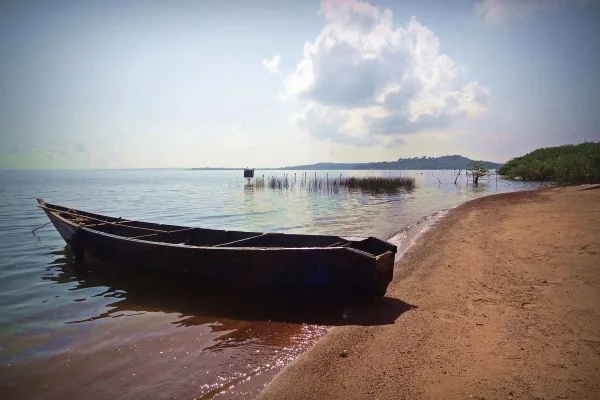
Lake Victoria, Uganda. ZEF works with the concept of nature-based solutions.
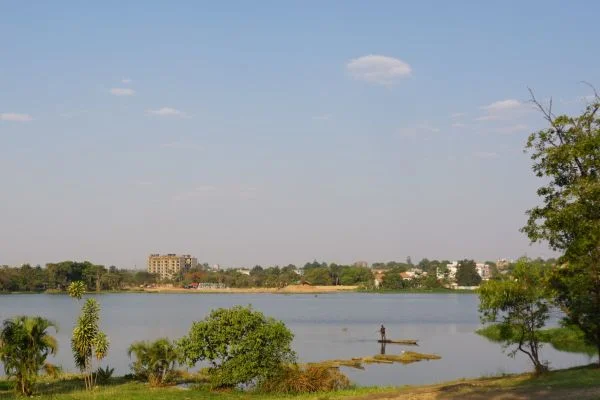
Scenery in the Democratic Republic of Congo. The alternating occurrence of water scarcity and floods poses huge challenges for countries on the African continent.
ZEF Projects related to "Water resources (management)"
Keywords
AquaInsight; water resources management; data-scarce regions; remote sensing; hydrological modeling; irrigation performance; evapotranspiration; SEBAL; climate change; Panj Amu River Basin
Countries
Afghanistan
Summary
The project proposes developing AquaInsight, a comprehensive tool integrating remote sensing and hydrological models to assess water availability versus demand, detect supply–demand gaps, evaluate irrigation performance, and simulate water-management strategies embedded in policy scenarios for data-scarce settings.
Methodology
Remote-sensing based water-demand monitoring using Surface Energy Balance Algorithm, hydrological-model coupling and irrigation performance evaluation.
Main Cooperation Partners
- Prof. Dr. Christian Borgemeister (Germany)
- Dr.-Ing. Bernhard Tischbein (Germany)
- Dr.-Ing. Usman Khalid Awan (Australia)
Main Funding Partners
- Deutsche Forschungsgemeinschaft (German Research Foundation)
Duration of the Project
2025 - 2028
Team
- Dr.-Ing. Fazlullah Akhtar (PI)
- Prof. Dr. Christian Borgemeister
- Dr.-Ing. Bernhard Tischbein
- Dr.-Ing. Usman Khalid Awan
Contact
Dr.-Ing. Fazlullah Akhtar, f.akhtar@uni-bonn.de, Phone.: +49 (0) 228 73 4031
Keywords
Earth Commission; Safe and Just Boundaries; Justice; Earth System Boundaries; Global Commons; Risk Assessment; Burning Embers; Just Access Foundation; Sustainability Science; Planetary Boundaries Comparison.
Countries
Global (Work conducted under the Earth Commission, a global scientific assessment hosted by Future Earth Sweden).
Summary
This project supports the Earth Commission’s Safe and Just Boundaries Workstream, contributing scientific coordination, assessment, and synthesis toward defining and quantifying safe and just Earth system boundaries (ESBs). Under the guidance of Co-lead Dr. Aditi Mukherji and the Earth Commission Science Director, Dr. Albert Nostrom, Prof. Dr. Anindita Sarkar provides conceptual, analytical, and research support as part of the extended Earth Commission Secretariat.
Activities include coordination across all work streams, literature review, data analysis, integration of justice considerations into ESBs, conducting training and workshops, and contributing to scientific publications, as well as creating burning ember diagrams and assessing interactions among boundaries.
Methodology
- Systematic literature review on justice dimensions of ESBs.
- Data collection and preparation for quantification of "just" boundaries and burning ember diagrams.
- Comparative assessment of safe boundaries frameworks (incl. planetary boundaries).
- Expert consultation and synthesis through participation in workstream meetings.
- Qualitative and quantitative analysis on access foundations and their Earth system impacts.
- Ongoing reporting and contribution to multi-author peer-reviewed papers.
Main Cooperation Partners
- Future Earth Sweden – Host of the Earth Commission Secretariat.
- Earth Commission Science Directorate.
- Workstream Co-Leads, especially Dr. Aditi Mukherji (CGIAR).
- Global Commons Alliance (GCA).
- Rockefeller Philanthropy Advisors (RPA).
Main Funding Partners
- Stiftelsen Future Earth Sverige (Future Earth Sweden) – Primary funder and administrator of the Earth Commission grant.
The grant is financed by: - Global Challenges Foundation
- Global Commons Alliance (via Rockefeller Philanthropy Advisors).
Publications
- Peer-reviewed papers on safe and just Earth system boundaries and its interactions (multi-author).
- Updates to the Earth Commission assessment and methodological reports.
(Final list to be updated as publications are released.)
Homepage
Workstream 1: Safe and Just Boundaries
https://earthcommission.org/workstream-1-safe-and-just-boundaries/
Duration of the Project
01 July 2024 – 31 December 2026 (grant period).
Team
- Dr. Anindita Sarkar
- Dr. Aditi Mukherji
- Dr. Steven Lade
- Dr. Peter Verburg
- Dr. Albert Nostrom
- Dr. Kendra Gonzales
- Dr. Natalie Davis
- Dr. Fatima Denton
- Dr. Joyeeta Gupta
- Dr. Juan Camilo Cardenas
- Dr. Lisa Jacobson
Contact
Prof. Dr. Anindita Sarkar, anindita@uni-bonn.de
Summary
The Malabo Montpellier Panel works to accelerate progress towards sustainable food systems transformation in Africa. It identifies areas of progress and positive change across the continent and assesses what successful countries have done differently. It identifies and analyses the most important policy and institutional innovations and programmatic interventions that can be replicated and scaled up by other countries.
The Malabo Montpellier Panel, co-chaired by Dr. Ousmane Badiane (Executive Chairperson, AKADEMIYA2063) and Prof. Joachim von Braun (Distinguished Professor, University of Bonn), convenes 18 leading experts in agriculture, ecology, nutrition, and food security to facilitate policy innovation by African governments to accelerate progress towards sustainable food systems transformation in Africa.
The affiliated Malabo Montpellier Forum provides a platform to promote policy innovation by using the evidence produced by the Panel to facilitate dialogue and exchange among high-level decision-makers on African food systems transformation, climate change adaptation, and mitigation. The Forum is co-chaired by H.E. Hailemariam Dessalegn, former Prime Minister of Ethiopia, and H.E. Assia Bensalah Alaoui, Ambassador at Large to His Majesty Mohamed VI, the King of Morocco.
Main Cooperation Partners
AKADEMIYA2063
Main Funding Partners
- The German Federal Ministry for Economic Cooperation and Development (BMZ)
- The African Development Bank (AfDB)
- The United States Agency for International Development (USAID)
Publications
- Malabo Montpellier Panel Brochure
- Malabo Montpellier Panel Factsheet
All other publications can be found on the project website.
Duration of the Project
01.01.2023 - 31.12.2026
Project Homepage
https://www.mamopanel.org/
Team
Panel Members
Contact
Prof. Dr. Joachim von Braun, Phone.: +49-228-73-1800
Keywords
bioeconomy, sustainability, governance, biotechnology, South America
Countries
Argentina, Brazil, Uruguay
Summary
The Southern Cone of South America is one of the most important world regions for the provision of bio-based feedstock worldwide with many countries in the region currently undergoing dynamic changes in various bioeconomic sectors. Despite the region’s enormous potential for sustainable bio-based transformation, promoting environmentally responsible and equitable bioeconomic change remains a major governance challenge. This project focuses on the emergence and sustainability performance of the bioeconomies from Argentina, Brazil, and Uruguay and aims to analyze bio-based initiatives from a political sciences and agricultural economics perspective.
The planned research seeks to inform governmental and non-governmental, including private, decision-makers in South America and beyond about entry points for action towards promoting climate smart bio-based innovation processes that safeguard rural employment and the equitable distribution of the benefits and costs of bio-based transformation. Through strong partnerships with Universities in the Southern Cone and engagement at the science-policy interface, the project will strengthen international collaboration and its impact in the study regions.
Methodology
(1) Impact evaluation analysis of national bioeconomy policies
(2) Value chain and value-web analysis
(3) Modeling of land use change and GHG emissions
(4) Comparative case studies
(5) Qualitative data analysis
Main Cooperation Partners
- Universität Münster
- Universidade Federal de Minas Gerais (UFMG)
- Universidad Austral
- Universidad ORT Uruguay
Main Funding Partners
BMEL
Publications
See homepage
Duration of the Project
2020 - 2026
Project Homepage
https://sabio-project.org
Team
- Prof. Dr. Jan Börner
- Prof. Dr. Thomas Dietz
- Dr. Jochen Dürr
- Dr. Karen Siegel
- Carol Bardi
- Maria Eugenia Silva Carrazzone
- Daniela Gomel
- Daniel Kefeli
- Pablo Mac Clay
- Serena Olivera
- Laura Rojas
- Guilherme Stein
- Trevor Tisler
Contact
Dr. Jochen Dürr, Phone.: +49-228-73-4467