A region at a crossroads
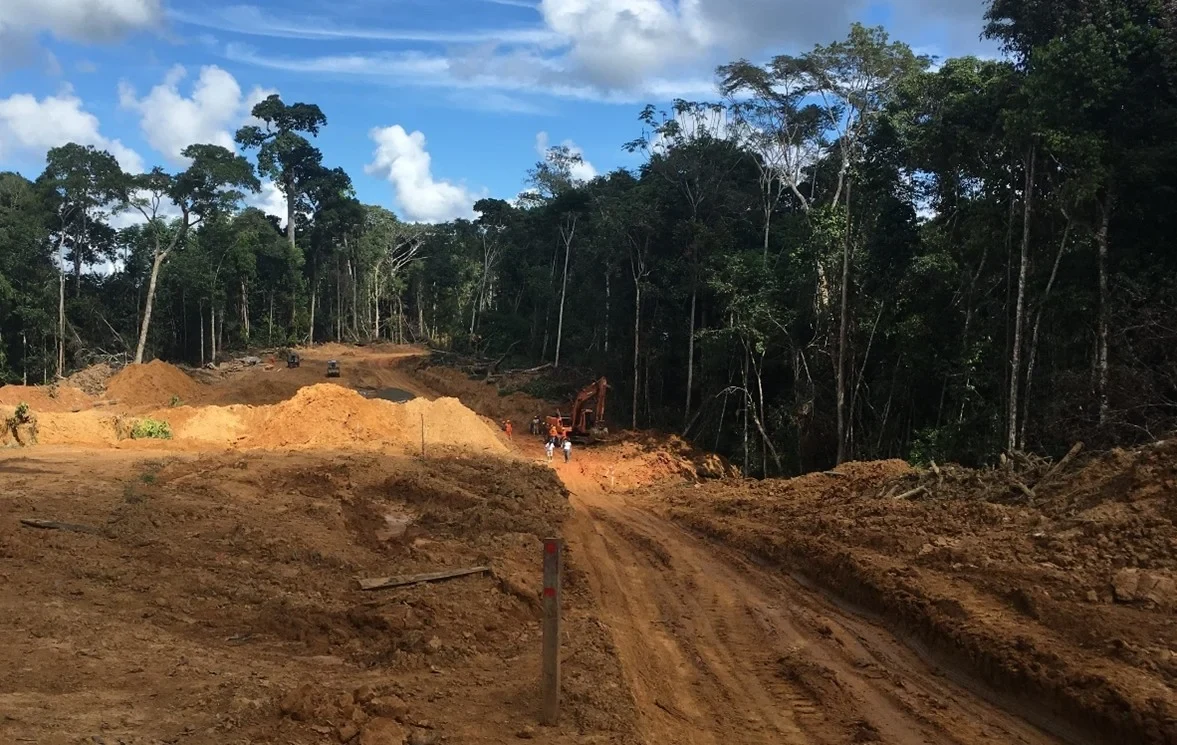
The Amazon rainforest is much more than just a global carbon sink and a biodiversity hotspot. It is also home to 30 million people whose lives are inextricably linked to the ecosystem of the rainforest. In the so-called MAP region, however, this balance is under unprecedented pressure. Historically isolated, the region gained greater economic and commercial importance following the construction of the Interoceanic Highway in 2010. However, this has also intensified logging, commercial agriculture, cattle ranching, gold mining, and illegal activities. These changes could push the region towards a 'tipping point', causing the social and ecological systems of rural households to lose their resilience and become less stable and sustainable.
The MAP region
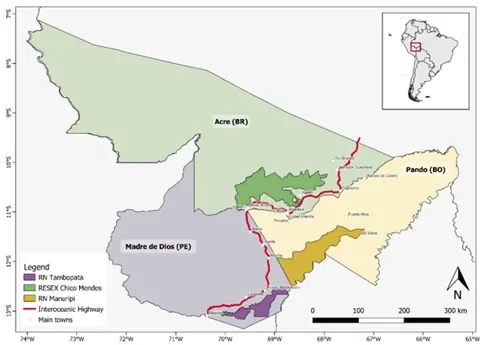
The MAP region is a transboundary area in the south-western Amazon, covering the states of Madre de Dios (Peru), Acre (Brazil) and Pando (Bolivia). Due to its unique combination of factors, the region is considered an ideal place to study how infrastructure development, different land uses, nature conservation and institutional structures evolve across national borders and in the context of climate change.
Three countries, three realities
Despite sharing the same ecological conditions, our research shows that the three MAP countries have evolved distinct social-ecological systems. In Pando, Bolivia, the stability of the system has traditionally depended on the Brazilian nut trade. However, volatile international prices and political instability have weakened local institutions and made the economy, which is dependent on non-forest timber products, more fragile. In Acre (Brazil), the economy is dominated by cattle ranching. Driven by steady market demand and a lack of effective control measures, the primary threat to its resilience is the conversion of forest to pasture. Meanwhile, in Madre de Dios (Peru), the economy has diversified significantly, with activities such as farming, ecotourism, and mining on the rise. On the one hand, this diversification has provided an economic buffer. On the other hand, the state is struggling to control the increase in illegal mining and logging, which are degrading the environment and the social fabric.
Understanding complex systems in real life
In real life, things are connected in ways that are difficult to understand, such as the way in which a community, its environment and its economy influence each other. These are called complex systems. Studying complex systems helps us to uncover these connections and find ways to prevent harmful situations.
This is clearly evident in the MAP region, where land use, economic activity and institutional settings interact. Now, under added pressure from external forces such as climate change, these systems risk evolving towards decline and even collapse, reaching a technical tipping point.
Crucially, such complex systems cannot be investigated in isolation. To understand them, we must engage with the people affected by and affecting the system in all its dimensions. This inclusive process forms the basis of our research approach: participatory systems analysis.
The Participatory Systems Approach
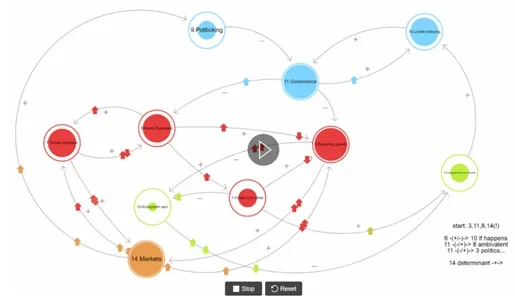
Modeling complex social-ecological systems remains a challenging and unfinished field of academic research. Our approach combines stakeholder analysis and participatory systems analysis to produce results that are both locally legitimate and plausible in the short term.
How to strengthen systems’ resilience
Our participatory systems analysis indicates that all three sites exhibit a pronounced inclination towards instability. This can be caused either by the dominance of one component, or by conflicts between several components pulling systems in different directions. Therefore, strategies to prevent tipping points must be tailored to each site.
However, two overarching measures appear appropriate for all three sites: promoting economic diversification in line with forest care, and strengthening governance.
Madre de Dios (Peru) has made considerable progress in diversifying its local economy, whereas efforts in Acre (Brazil) and Pando (Bolivia) remain modest. In the second case, all three sites face an arduous task: improved governance would entail resolving the volatility of their institutional landscape, which is a consequence of chronic political struggles. If these measures are successful, the following priorities should be established: formalizing the informal and illegal sectors in Madre de Dios; stabilizing the institutions that govern forest products in Pando; and decoupling regional development from extensive cattle ranching in Acre.
About the authors:
Dr Daniel Callo-Concha is an associated researcher at the Center for Development Research (ZEF), University of Bonn; and Lecturer at the RPTU Koblenz-Landau, Germany.
Professor Oliver Frör leads the Environmental Economics group at the RPTU Koblenz-Landau, Germany.