WHAT IS IT ABOUT?
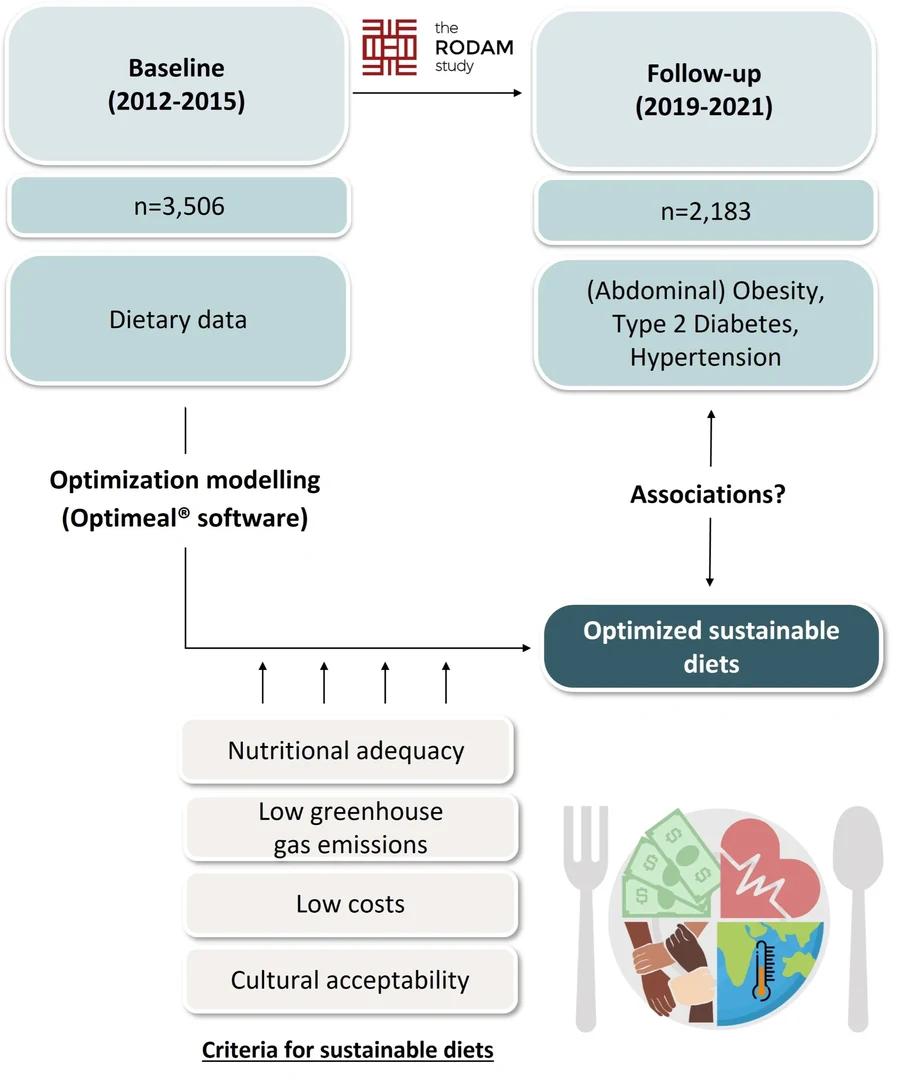
We investigated how sustainable the diets are among adults in Ghana and Ghanaian migrants in Europe. We also wanted to find out whether more sustainable diets can reduce the risk of obesity, type 2 diabetes, and hypertension. Sustainable diets are financially affordable and have limited impact on the climate. At the same time, it should provide the body adequately with nutrients and align with people’s cultural and social habits.
WHAT IS THE MOST IMPORTANT FINDING?
Among the 2,183 participants surveyed, diets were not very sustainable overall. The variation across the study population was small. The diets of adults in Ghana were more sustainable than those of Ghanaian migrants in Europe. In addition, the diets of older people and people with a lower educational level were more sustainable. People who consumed fewer calories also followed a more sustainable diet. Surprisingly, there was, however, hardly any association between a more sustainable diet and obesity, type 2 diabetes, or hypertension. We suspect that the lack of associations is attributable to the overall low sustainability and the low variation in the diet.
WHAT APPROACH DID YOU TAKE IN THE STUDY?
We began by assessing the diets of the study participants. Through a mathematical approach, we constructed dietary patterns from the data that fulfill the criteria of sustainable diets, as described above. Next, we investigated to what extent the diet of the study participants differed from these optimum dietary patterns. This allowed us to estimate how sustainable their diet actually was. Afterwards, we investigated whether the sustainability of the diet was associated with the development of obesity, type 2 diabetes, and hypertension.
WHAT WAS THE BIGGEST CHALLENGE?
The follow-up of participants took place during the COVID-19 pandemic. It was difficult to reach them during that time, especially in Ghana, where addresses are often lacking. There were also challenges in the mathematical construction of sustainable diets: Women and men require different quantities of nutrients; and the usual portion sizes in Ghana differ from those in Europe. As a result, the calculations had to be adjusted to account for gender, the respective portion sizes, and the location.
IS THERE A PRACTICAL APPLICATION?
The results help us to develop dietary practices that offer several advantages at the same time: They can prevent disease development, protect the climate, be affordable, and still taste good.
WHAT DO YOU RECOMMEND?
The results show that sustainable diets in sub-Saharan Africa should consist primarily of plant-based foods. Above all, red meat and fish products could be replaced more frequently with plant foods such as pulses and whole-grain products. A little more fish and seafood could also be part of the diet. Overall, people should eat fewer foods that contain a large number of calories but comparatively few nutrients.
WHAT’S NEXT?
We discussed prototypes of sustainable diets, which were developed through this mathematical approach, with adults in Ghana and with Ghanaian migrants in Germany. This included questions about feasibility in everyday life, acceptability by people, and cultural appropriateness. These results will help us discover whether and how these prototypes of sustainable diets can be used in future studies and health programs.