ZEF researchers in the spotlight
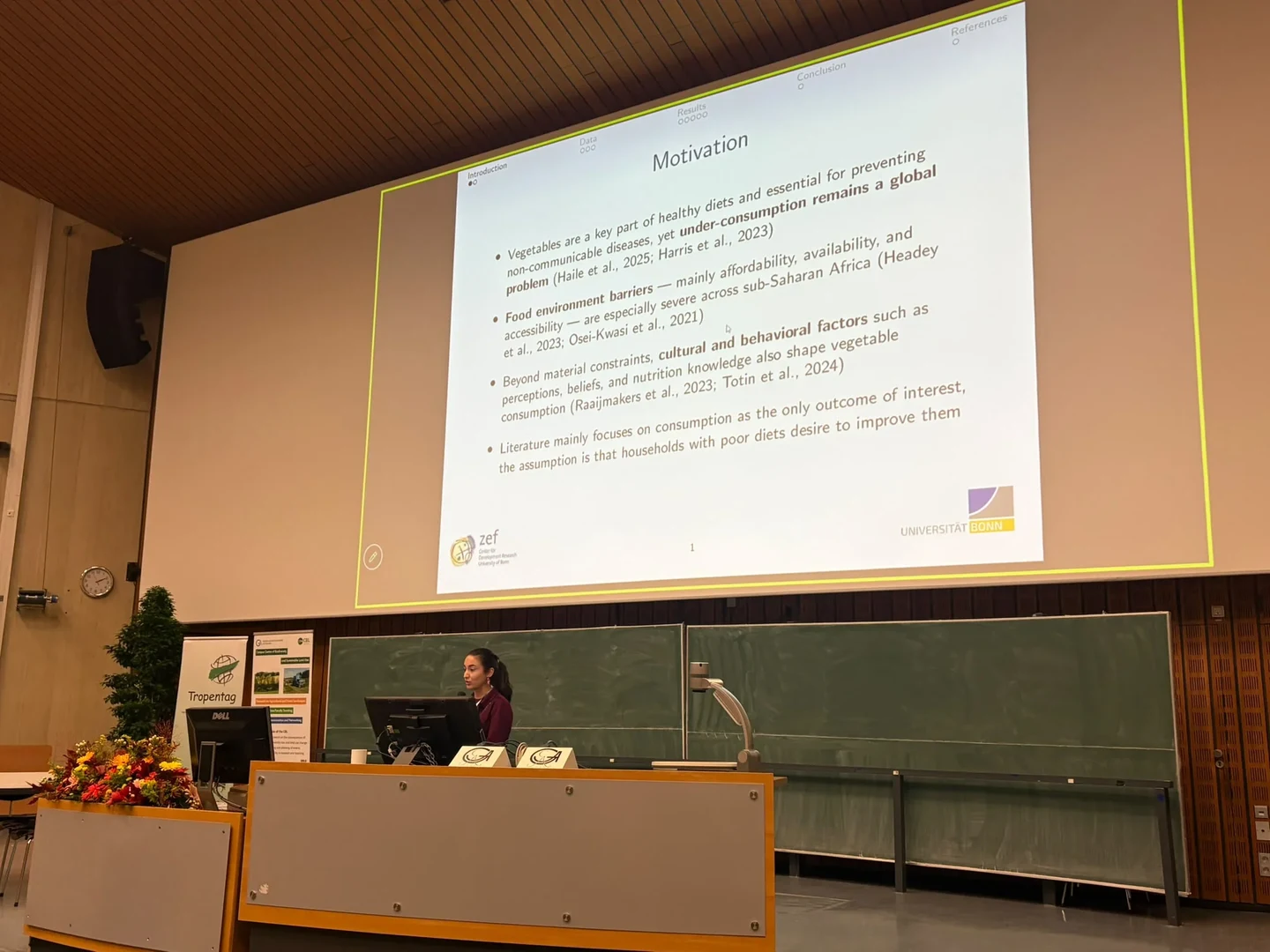
- Junior researcher Elisa Langella presented her paper “Who wants to consume more vegetables? Determinants of consumption and aspirations in Ghana”. She tells: "In this paper, we explore whether and why households want to increase their vegetable consumption, focusing on Ghana. Encouragingly, we find that over 60% of the households in our sample aspire to eat more vegetables. However, this aspiration is not deficit-driven; those who consume insufficient vegetables (the main policy targets) are significantly less likely to want to eat more. Several drivers related to the food environment and knowledge and beliefs differently shape consumption and aspiration outcomes. Our results highlight the need for complementary, multi-level demand-side policies that address material and motivational constraints to vegetable consumption simultaneously".
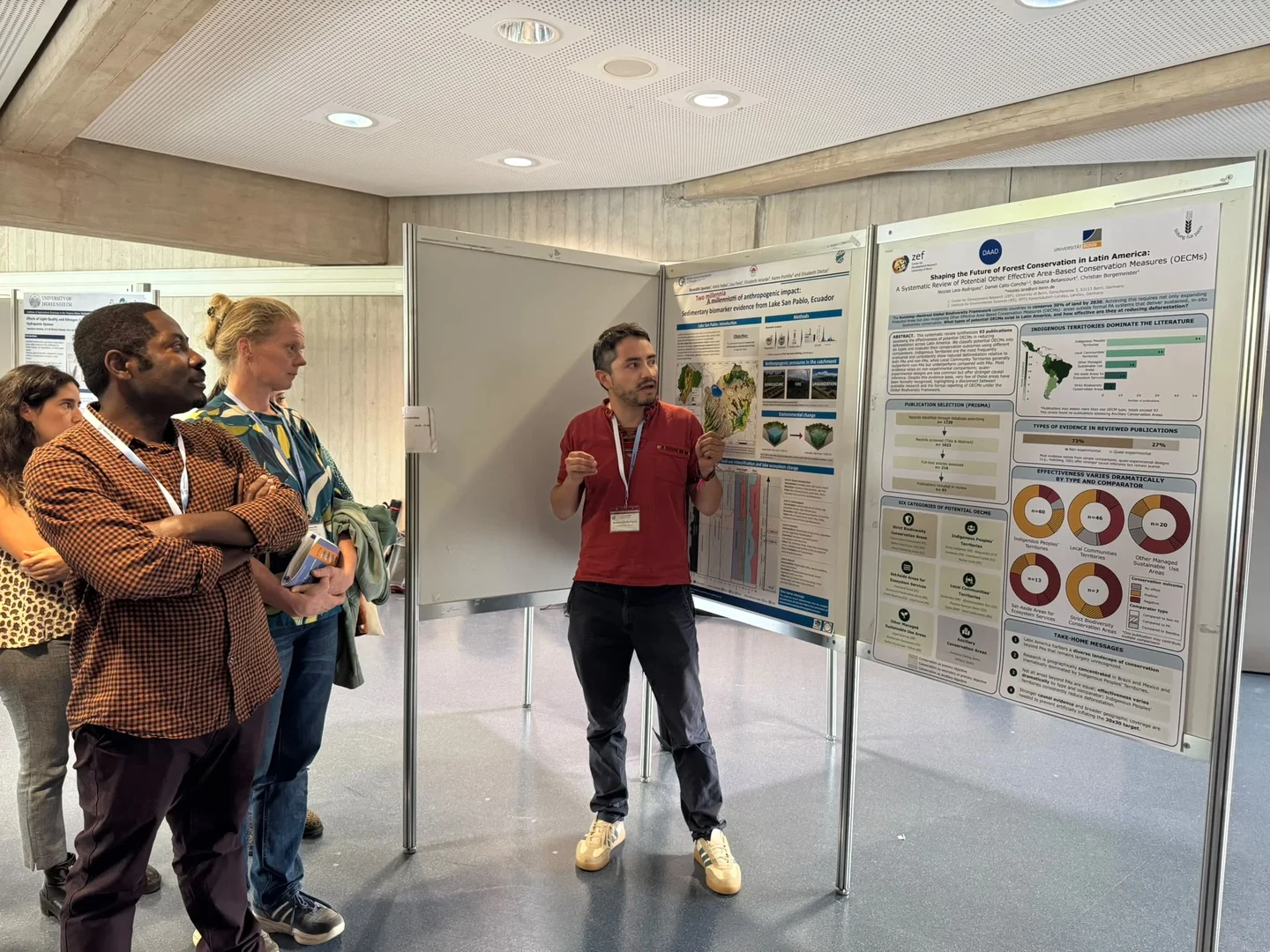
- Junior researcher Nicolas Lara Rodriguez has presented his research on Other Effective Area-Based Conservation Measures (OECMs). He says: "Countries around the world have committed to protecting 30% of the land by 2030. However, protected areas alone won't achieve this goal. This is where OECMs come in. These are areas that aren't formally protected, yet they still deliver real, long-term biodiversity conservation. Latin America is home to a rich mosaic of these areas, including Indigenous territories, community forests, and legal reserves. However, no one had systematically classified these areas or assessed their effectiveness. To address this issue, we reviewed 93 publications and proposed a typology of six potential OECM types across the region. This is a necessary first step to bridge the gap between conservation policy and on-the-ground practices".
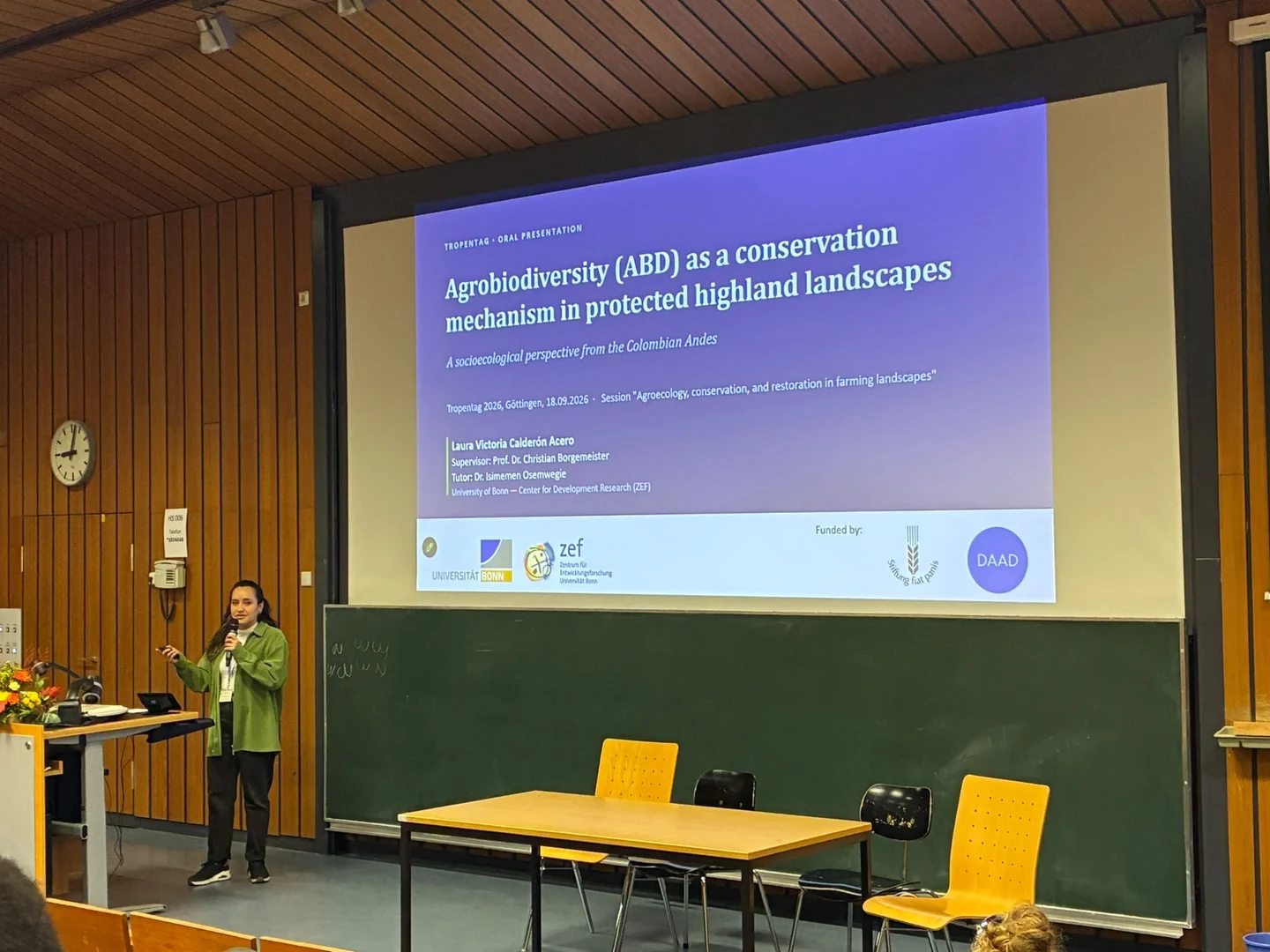
- Junior researcher Laura Victoria Caldéron Acero gave an oral presentation about her study on the potential of agrobiodiversity to contribute to biodiversity conservation in the areas surrounding two protected páramo areas in Boyacá, Colombia: "Using a mixed-methods approach based on socio-ecological systems theory, we examined 46 farms to understand how agricultural systems interact with conservation efforts and local livelihoods. Preliminary results reveal the dual role of agroecosystems: supporting rural livelihoods and contributing to the ecological structure of the landscape. The study suggests that agrobiodiversity could bridge the gap between conservation goals and compensation mechanisms and advance conservation beyond protected areas".
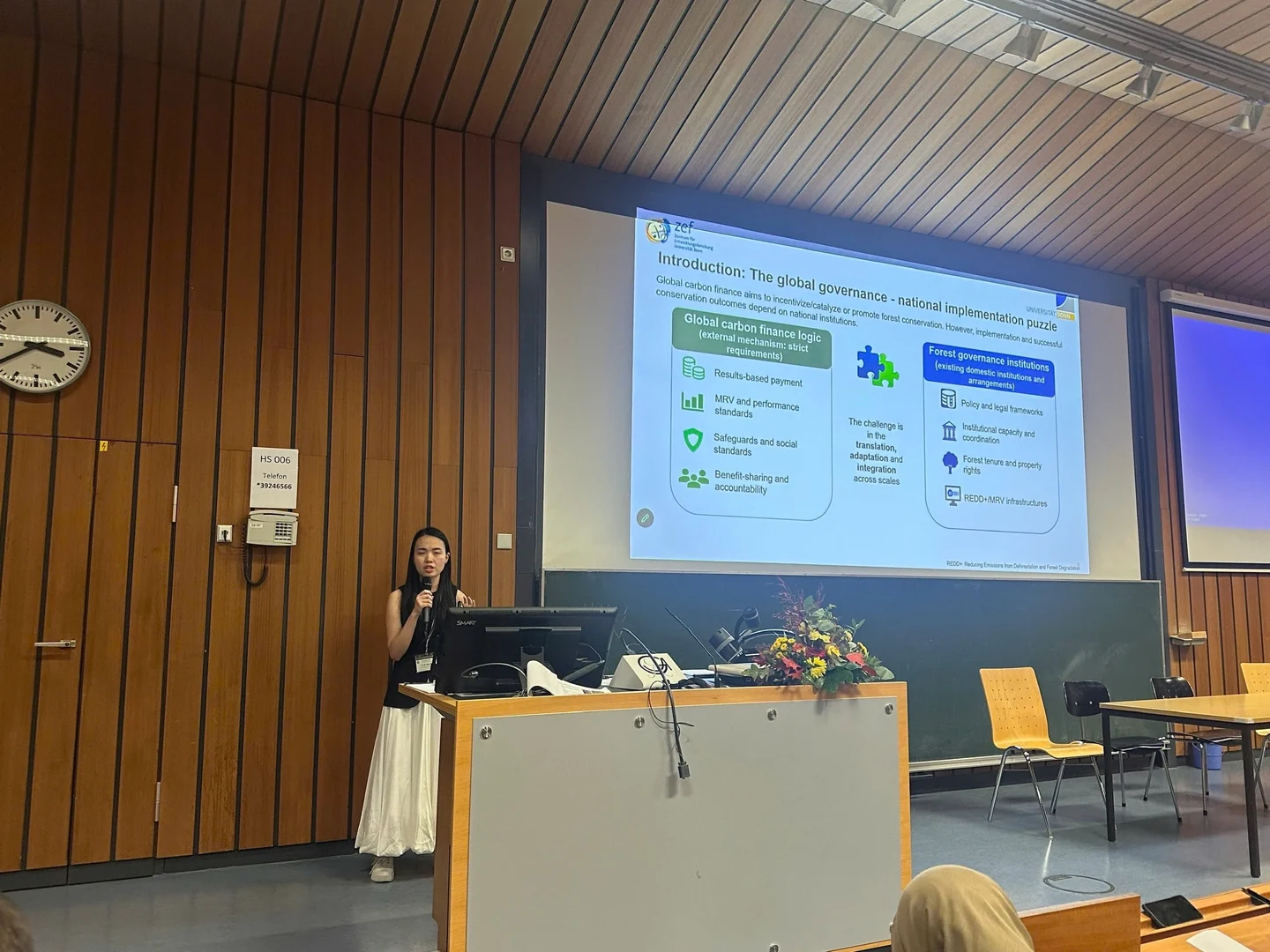
- The topic of junior researcher Ha-My Nguyen's oral Presentation was Hybridizing Global Carbon Finance with Domestic Forest Governance: Evidence from Vietnam’s Emission Reduction Payment Agreement (ERPA). "As global results-based climate finance accelerates across the Global South, a central governance puzzle persists: How can standardized international carbon mechanisms be integrated into complex, pre-existing domestic bureaucracies without creating fragile parallel institutions? This study uses Vietnam’s milestone Emission Reductions Payment Agreement (ERPA) as an empirical case study and reveals that institutional compatibility is inherently selective. While existing administrative mechanisms enable rapid fiscal adoption, significant governance friction emerges when translating global reporting, benefit-sharing, and safeguard mandates into domestic practice. Most critically, the study uncovers a paradox: funds transferred does not equal funds operationalized. This demonstrates that international capital can clear every macro-level hurdle, yet still stall at the grassroots level due to rigid state forestry procedures, regulatory overlaps, and temporal silvi-cultural mismatches".
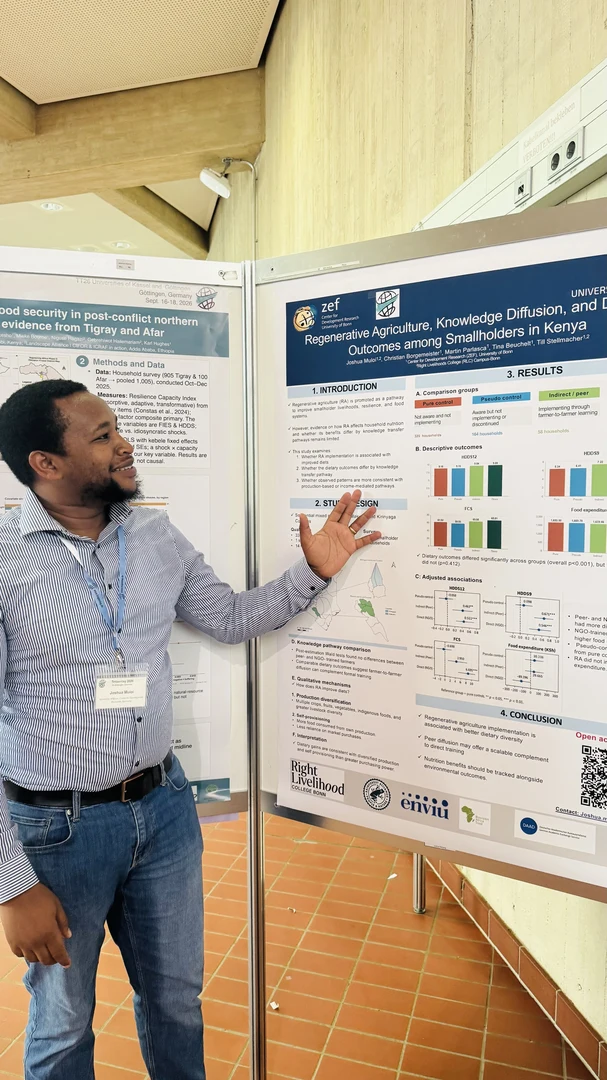
- Junior researcher Joshua Muloi presented his paper on Regenerative Agriculture, Knowledge Diffusion, and Dietary Outcomes among Smallholders in Kenya. "In this paper, we examine how regenerative agriculture implementation and knowledge-sharing pathways are associated with household dietary outcomes among smallholder farmers in Kenya. Our findings show that regenerative agriculture is associated with higher household dietary diversity, with both direct training and farmer-to-farmer learning linked to better dietary outcomes. These improvements are more consistent with increased on-farm food production than higher food expenditure, highlighting the potential of regenerative agriculture to support household food availability through self-provisioning".